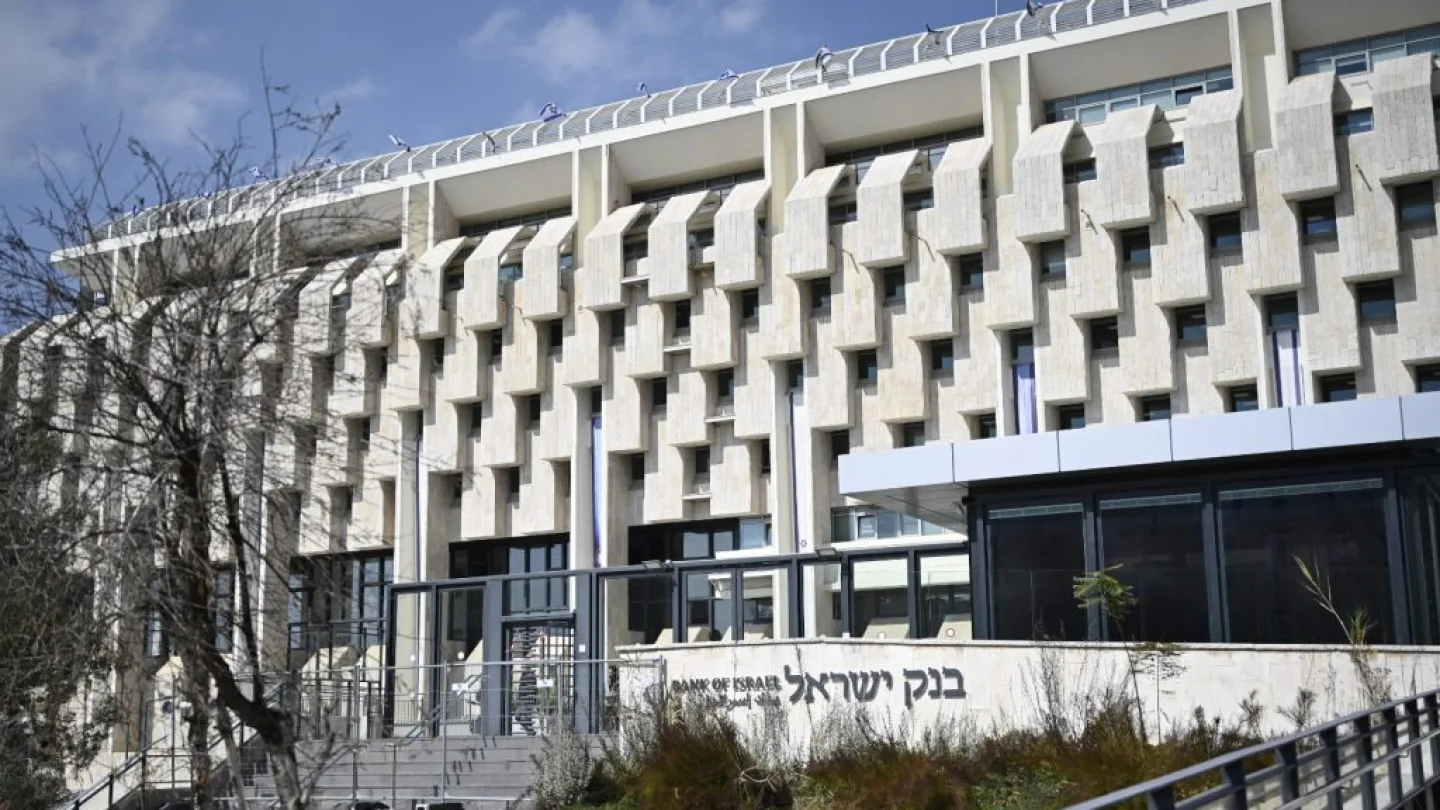
Israeli bank earnings test wartime capital strength
Israeli bank earnings are holding up better than the economy. FIBI kept credit growing and CET1 above requirements even as Israel's GDP shrank 3.3%.

First International Bank of Israel spent the first quarter answering a wartime banking question: can an Israeli lender keep extending credit, protect capital and still return cash while the domestic backdrop stays unstable? In raw terms, the answer was yes. Net income was NIS 480 million, the common equity tier 1 ratio held at 10.82 per cent and credit to the public rose to NIS 155 billion.
Those figures make the release more than a routine earnings note. Net income was down from NIS 530 million a year earlier, so some pressure did show up in the profit line. Even so, return on equity was 13.2 per cent, adjusted return on equity was 16.7 per cent excluding excess capital above target and the special tax levy, fee income rose 9.2 per cent and the board still approved a NIS 240 million dividend, or roughly half the quarter’s profit. For investors, that looks less like fragility than a contained squeeze.
A harder reading starts with the macro data. Reuters reported that Israel’s economy contracted at a 3.3 per cent annualised pace in the first quarter, which means sturdy bank income can still sit alongside a shrinking real economy. The skeptical case is not that FIBI looks weak right now. Rather, it is that bank results often stay firm until macro damage finally reaches borrowers, margins or both.
Lenders sit at the junction of those two stories. When households keep spending, companies keep drawing facilities and deposits remain sticky, resilience shows up quickly in bank results. Once the strain deepens, the bill tends to land there as well.
Some economists are already looking through the first-quarter contraction. As Ofer Klein said, the easing of restrictions in April may change the direction of travel quickly.
“The lifting of most restrictions in April and the improvement in economic activity since then … indicate a relatively quick return to positive growth in the current quarter.”
— Ofer Klein, Harel Insurance and Finance, via Reuters
Still, the warning in the same Reuters report is the one investors cannot dismiss.
“Wars are generally inflationary and damage growth.”
— Jonathan Katz, via Reuters
That tension defines Israeli bank earnings this season. A quarter can look sound even while the operating environment deteriorates.
Capital is the real story
Capital, more than the income statement, is what makes FIBI’s quarter useful as a read-through on Israel’s banking system. A softer profit line is manageable. Shrinking regulatory headroom is not.
By that measure, FIBI still looks comfortable. The 10.82 per cent CET1 ratio leaves the bank 1.58 percentage points above its regulatory requirement, enough to support the argument that distributions can continue while credit keeps growing. Management underlined that point with a NIS 240 million dividend. That is not how a bank telegraphs near-term balance-sheet stress.
Credit growth is what could tighten the math. Loans to the public were up 16.0 per cent from a year earlier and 4.8 per cent from the end of 2025. Should that pace keep outrunning profit growth, risk-weighted assets will keep rising and surplus capital will narrow. Investors therefore need to compare FIBI not with a clean pre-war quarter but with peers such as Bank Hapoalim and Bank Leumi, which face the same trade-off between growth, capital returns and wartime uncertainty.
Management framed the period in much the same way. In the company’s results statement, chief executive Eli Cohen did not pretend conditions had normalised.
“In this quarter, FIBI conducted its operations against the backdrop of the ongoing war and a complex, dynamic macroeconomic environment.”
— Eli Cohen, chief executive of First International Bank of Israel
Cohen’s wording is revealing because it points to operability, not immunity. Israeli lenders do not need to be untouched by the war to keep investor confidence. They need to show that the sector entered the shock with enough capital and pricing power to keep functioning through it.
Attention will soon shift from the snapshot to the lagging indicators. If weaker demand, labour disruption or softer property activity begin to filter through, the key numbers will not be this quarter’s dividend or fee growth. They will be arrears, provisions and the speed at which the capital buffer starts to shrink.
Growth still carries a macro bill
Loan growth is the other reason the quarter matters. Credit reached NIS 155 billion, fee income rose and return on equity stayed in the low teens. In a normal economy, that would read as plain demand strength. Under wartime conditions, it reads more cautiously: parts of the domestic economy are still borrowing, still transacting and still generating enough income for banks to remain profitable.

That resilience cuts both ways for households and companies. Continued credit growth shows the private sector has not frozen. At the same time, it means banks are still extending balance sheets into an economy whose recovery path depends heavily on security conditions, inflation and policy.
Policy is the swing factor. If the Bank of Israel’s downgraded growth outlook proves right, the next stage of the cycle may be less friendly for bank margins even if it is better for borrowers. Slower growth usually cools credit demand. Rate cuts from the current 4 per cent policy level would support the wider economy, but they could also compress net interest income if asset yields reset faster than funding costs.
First-quarter resilience, then, may reflect conditions that will not last. Higher rates have supported profitability for banks across many markets. The risk is reading a quarter with solid capital and decent returns as proof that the earnings base is insulated. It is better read as evidence that the system had a buffer when the shock arrived.
That distinction is why FIBI’s result matters beyond one lender. Israeli bank earnings are becoming a lagging but still useful macro indicator. They show where stress has not yet broken the system. They do not show that the stress has passed.
What investors should watch next
The clearest takeaway from FIBI’s quarter is that Israeli lenders can stay profitable deep into a disrupted macro cycle if they begin with strong capital and if activity does not fall away all at once. That is a better outcome than bears might have expected. It is not an all-clear.
The next signals matter more than the backward-looking profit figure. Investors should watch whether credit growth keeps outrunning the economy, whether capital buffers remain comfortably above minimums after dividends, and whether weaker growth or lower rates start to erode margins before any rebound in activity fully takes hold. If those lines hold, FIBI’s quarter will look like evidence of resilience. If they do not, it may read as the point at which Israeli banks still looked strongest just before the macro bill arrived.
Naomi Voss
Banks and deals reporter covering bank earnings, fintech, M&A and IPOs. Reports from New York.