Minnesota opens crypto custody to state-chartered banks and credit unions
Minnesota's new custody law gives state-chartered banks and credit unions a direct route into crypto services, widening competition with specialist firms while keeping compliance and segregation rules in place.

Minnesota will let state-chartered banks and credit unions offer virtual-currency custody from August 1, opening a direct route for ordinary lenders to move into crypto services while binding them to notice, segregation and compliance rules. Governor Tim Walz signed the legislation, which gives a state banking system a clearer path into an activity that has largely been the territory of specialist exchanges, trust companies and dedicated digital-asset custodians.
Custody is not a back-office afterthought. It decides who holds customer assets, who controls the compliance around them and who gets the first chance to sell adjacent services. If community banks and credit unions can put crypto custody on the same shelf as deposits, payments and lending, the competition for digital-asset customers shifts onto the mainstream banking rails many households and small businesses already use.
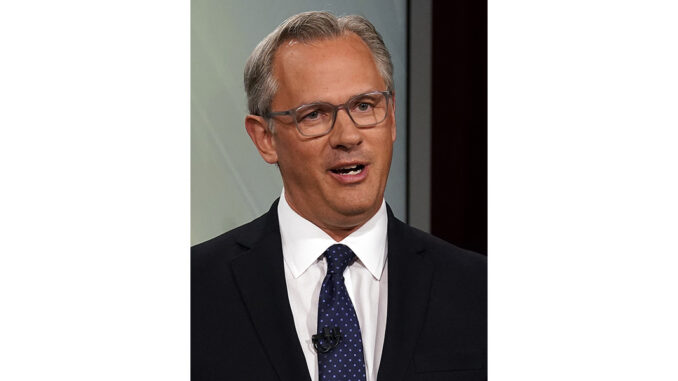
Institutions must give 60 days’ written notice before launching a custody service, and the law ties that permission to requirements on asset segregation and compliance. The mechanics are not complicated. Representative Steve Elkins, the bill’s author, said community banks and credit unions pressed for the authority so they could offer custody as part of a broader financial-services roster. “The community banks and credit unions wanted to be able to offer this service for their customers and members as part of a comprehensive array of financial services,” Elkins said, according to CoinDesk.
House Session Daily quoted Sam Smith, chief executive of the Minnesota Credit Union Network, saying the measure “levels the playing field” by letting Minnesotans keep virtual currencies with a local credit union or bank. That framing captures the commercial logic. Lawmakers did not create a new crypto-native institution. They invited incumbent deposit-takers to compete for a business line that has mostly sat outside ordinary branch banking.
The state law does not erase the federal layer. Credit unions and banks entering digital assets will still operate within broader supervisory expectations, including guidance from the National Credit Union Administration. The Minnesota statute is a state-level framework for how traditional lenders enter a tightly watched market, not a deregulatory bypass.
Why the custody race is widening
The timing stands out because the specialist side of the industry is still piecing together its own regulated infrastructure. Galaxy Digital said on Monday it had received a New York BitLicense for its institutional crypto push, with founder Mike Novogratz saying digital assets were no longer sitting at the edge of institutional allocations. CoinDesk reported Galaxy’s platform assets at $9 billion, making it the second company this year to win a New York BitLicense. Minnesota’s law points in the same direction from a different angle: crypto firms want bank-like credibility, and banks want a path into crypto custody.
A local bank already has customer relationships, a compliance team and depositors who may trust a familiar name over an exchange or fintech app. A specialist custodian may still have deeper digital-asset expertise, wider token coverage or integrated trading — but if even a handful of Minnesota lenders act on the new statute after August 1, custody shifts from a niche crypto service toward a competitive banking product.
The next question is practical: which institutions file the required notice, how narrow their initial custody menus are and whether other states borrow Minnesota’s template. The law gives the banking industry an immediate option, and for crypto it means the fight over who holds customer assets is moving further inside the regulated financial system.
Tomás Iglesias
Financial regulation and legal affairs. SEC, CFTC, FCA, market-structure and enforcement. Reports from Washington.