Trump crypto rollback shifts oversight away from state regulators
State regulators have long handled crypto complaints and licensing. A federal shift could simplify compliance for large firms while thinning consumer-protection backstops.
A quiet Trump-administration pullback on state crypto oversight is shifting power away from the supervisors that long handled complaints against exchanges and money transmitters, and toward federal structures that promise one rulebook for firms that can reach them. Bank-charter interpretations are letting some crypto groups pursue national trust structures and argue that state licensing no longer applies, according to an International Consortium of Investigative Journalists report.
Who gets first look at custody failures, redemption strains or retail complaints — that is what changes for crypto exchanges, stablecoin issuers and large platforms trying to cut through a patchwork of state money-transmitter rules. State oversight has never been about ideological purity. Proximity is what it delivered. State agencies license firms, field customer complaints and can move quickly when a local harm appears. Pull back that layer and the compliance burden may fall for national operators, but an enforcement backstop can thin out with it.
Linda Conti, superintendent of Maine’s Bureau of Consumer Credit Protection, told ICIJ that if firms shift into national trust structures, “We will not be able to address consumer complaints.” Her concern is less about institutional turf than about the loss of a practical function. Under the old model, a resident who could not get assets released or a transfer unwound had a nearby regulator with licensing clout. Under a more federalised model, the relevant gatekeeper may sit in Washington, or the consumer may have to navigate a firm whose charter rests on a different legal theory altogether.
Firms trying to grow nationally face straightforward arithmetic. Maintaining approvals across dozens of jurisdictions, each with its own examination cycle, surety-bond rules and disclosure expectations, is expensive. A national structure replaces that with a single negotiating table. Reach that lane and simplification stops being a side benefit — it becomes part of the business case. The firms best able to absorb federal licensing costs are also the firms most likely to gain from preemption.
Washington is reinforcing the pull from the other direction. The Federal Register notice implementing the GENIUS Act sets out a framework under which a qualified payment stablecoin issuer needs a federal licence, while state-qualified issuers that grow beyond a $10 billion threshold move into federal oversight. Built into the threshold is a glide path. A stablecoin issuer can begin in one regime and then graduate into another once scale makes federal status unavoidable.
What this does is change the incentive map for crypto groups that want to look more bank-like without becoming banks in the conventional sense. It also changes the answer to a basic investor-protection question: if a stablecoin issuer or exchange affiliate runs into trouble, which regulator is responsible for the first hard call?
Why the states still matter
State supervisors describe their role as operational, not ceremonial. State regulators oversee 79 per cent of U.S. banks, the Conference of State Bank Supervisors noted in a statement on OCC stablecoin rules. Brandon Milhorn, the group’s president and chief executive, said that “Given the uninsured nature of stablecoins, strong capital requirements… are critical.” Stablecoin oversight is a question of reserves, redemption and what happens when confidence slips, not merely a chartering exercise.
Crypto stress rarely arrives as a neat legal dispute. It shows up as halted withdrawals, delayed redemptions, custody ambiguity or customer-service failures that quickly become solvency questions. State regulators have often been the first place where those complaints land. Decentralised supervision can be messy, their defenders argue, but it also creates more doors for consumers to knock on.
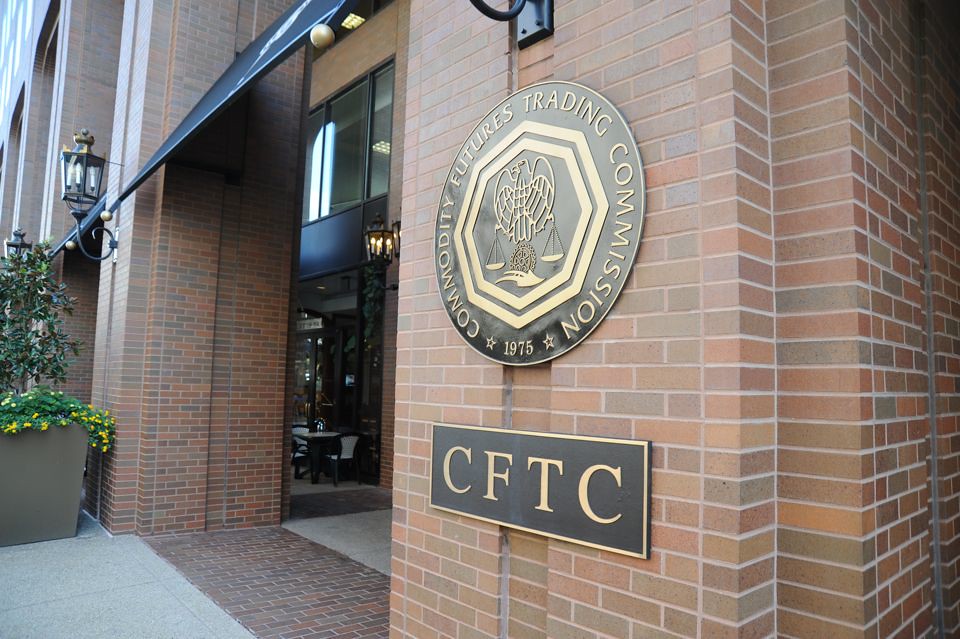
Harmonisation at the federal level has a genuine case behind it. Large crypto firms have long complained that a 50-state licensing map is expensive, slow and often duplicative. A single federal rulebook can, in theory, reduce compliance noise and make it easier for firms to build nationwide products. The argument has grown stronger as Congress and regulators move closer to national crypto statutes and inter-agency deals. In March, the SEC and CFTC announced a memorandum of understanding on crypto oversight, an attempt to present a more coordinated federal front after years of overlap and turf fights.
Getting Washington’s chart cleaner, however, does not answer what happens to state complaint desks, money-transmitter examinations or state consumer-protection cases when a crypto firm migrates into a charter that narrows local authority. The trade-off is between uniformity and multiple points of intervention.
What the shift means for crypto firms
Exchanges and stablecoin issuers are probably heading toward a more stratified market. Groups with the easiest path to a national trust or federal stablecoin licence stand to gain the most — they swap fragmented supervision for a single negotiating table and can present themselves to investors and counterparties as federally legible businesses. Smaller firms are unlikely to get the same advantage. They could remain in state systems longer, or face a two-speed market in which scale buys regulatory simplification.
Federal oversight is not automatically lighter. A federal regulator can demand capital, risk controls and reporting that some firms would prefer to avoid. Which type of friction matters more is the real question. State supervision spreads compliance across many agencies and keeps complaint channels closer to home. Federal supervision can be heavier in any one place, but it is one place. For a well-capitalised exchange or issuer, that distinction can be decisive.
Washington has been pushing toward a more settled crypto rulebook for several quarters, from market-structure legislation to attempts at SEC-CFTC coordination. This latest shift fits that same pattern. The industry is gaining clarity on which assets fall under which statute. It is also acquiring influence over where oversight lives and which watchdog gets displaced.
Underneath the procedural argument, the shift amounts to a change in market architecture. When a firm says it is federally supervised, counterparties may hear safety, while consumers may assume complaint routes remain intact. Those are different claims. One describes status. The other describes recourse.
Retail investors may notice the gap only after something breaks. A token issuer misses a redemption promise, a platform freezes transfers, or a custody dispute spills across entities with different charters. If state supervisors have less room to act, the route from complaint to remedy may become longer and more opaque. That is the practical risk embedded in a technical preemption debate.
Policymakers face a harder balance. Washington can make crypto oversight more coherent, and the market may welcome that. Coherence and resilience are not the same thing, though. Fewer regulators, fewer licensing chokepoints and fewer complaint-handling venues may also mean fewer early warnings. In finance, those redundancies are often expensive until the day they are not.
Strip away the Washington process framing and the rollback becomes something simpler: a redrawing of the line between efficiency for large firms and recourse for the people who use them. The consequences extend well beyond which agency signs which charter.
Tomás Iglesias
Financial regulation and legal affairs. SEC, CFTC, FCA, market-structure and enforcement. Reports from Washington.