Delta’s beat shows airfare pricing is still cushioning the fuel shock
Delta Air Lines topped Q2 estimates and held its 2026 profit target as premium fares and a refinery hedge helped absorb near-record fuel costs.
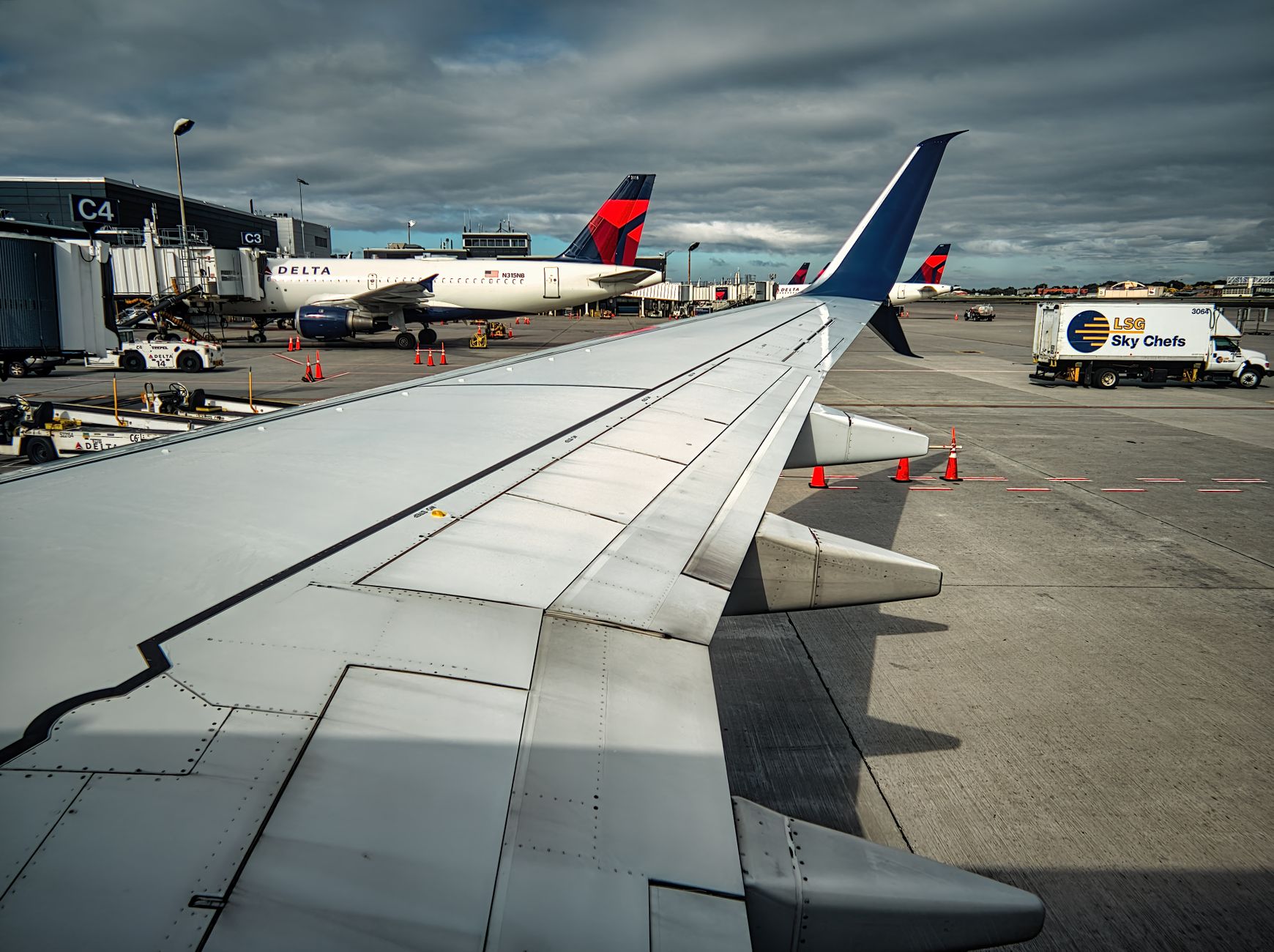
Delta Air Lines topped Wall Street’s second-quarter estimates on Friday and kept its 2026 profit target in place, a wager that firmer fares and premium demand can absorb a fuel bill that is still near record levels. Adjusted earnings were $1.56 a share, eight cents ahead of the $1.48 consensus, on revenue of $17.67bn against a $17.53bn forecast. Full-year guidance stayed at $6.50 to $7.50 a share.
That is the scorecard. The better read-through is on pricing. Delta is telling investors that passengers, especially corporate and premium-cabin travellers, are still paying enough to protect margins even as fuel costs climb.
Chief executive Ed Bastian said fare strength looked sustainable because demand remained firm, seat products were more varied and the industry had become less willing to add capacity at the first sign of cheaper oil. “I think it’s sustainable,” Bastian said on the post-earnings call. Chief commercial officer Joe Esposito gave a similar December-quarter signal, saying current trends offered “a constructive setup” if they held.
Premium seats carry the margin
Premium ticket revenue reached $6.92bn, just ahead of the $6.85bn Delta booked from main cabin fares. That mix would have looked unusual a few cycles ago. It now sits at the centre of the airline’s earnings story.
Corporate travel in aerospace, defence, banking and autos drove part of the split. Those travellers are less likely to abandon a trip because a fare is $40 higher, and premium cabins carry more revenue over the same aircraft floor space. When jet fuel moves against the carrier, that is where Delta has room to push price without chasing volume at the back of the plane.
The second support is supply. Domestic seat growth this summer is forecast at 2.5 per cent, according to Cirium schedules cited in the draft research, the slowest non-recession pace since 2013. Delta’s passenger revenue per available seat mile rose 4.8 per cent while capacity increased 3.2 per cent, a spread that matters more for margins than the headline EPS beat.
Fuel is still the test
Delta’s refinery helped, but it did not make the fuel shock disappear. Refinery revenue rose 83 per cent to $2.09bn, and the Trainer, Pennsylvania, operation cut the company’s per-gallon fuel cost by 11 cents against market prices. Adjusted fuel expenses still reached $4.41bn, up 24 per cent from a year earlier, while the average price paid per gallon climbed to $3.93, according to MarketWatch.

Analysts tend to treat the refinery as a hedge most rivals lack. A Cowen note cited in the draft research put Delta’s normal-market advantage at 5 to 7 cents a gallon, with a wider gap when crude spikes. The point is not that Delta is insulated. It is that the airline has one more lever than American, United or Southwest when crack spreads widen.
There is a consumer-side risk in that argument. Carriers can describe higher fares as fuel pass-through; travellers experience them as higher fares. A consumer-advocacy report cited Department of Transportation data from the 2022 fuel spike showing average fares up 12 per cent while fuel costs rose 34 per cent, implying only partial pass-through. Delta has not published its own pass-through metric. Bastian said pricing was “consistent with the value we deliver,” a phrase that leaves plenty of room for investors to watch booking curves.
The read-through for airlines
The rest of 2026 turns on whether oil retreats from today’s $3.93-a-gallon level. West Texas Intermediate crude has traded between $140 and $150 a barrel for much of the quarter, pressured by OPEC+ supply cuts and Middle East tension. If oil stays above $140, Delta’s unchanged EPS guide implies the company can still offset more than $1bn of fuel pressure through fares, the refinery and tight supply.

The stock reaction shows why investors were willing to give Delta credit but not a blank cheque. The shares closed at $49.20, up 3.4 per cent on the day and still 18 per cent below their January peak. Bulls can point to premium revenue and the refinery hedge. Bears can point to an old airline pattern: valuations usually compress when fuel stays elevated for more than two quarters, especially when debt remains above pre-pandemic levels.
Delta reports first among the major US carriers, so its results set the early tone for American, United and Southwest. The message from Atlanta is not that cost cutting has solved 2026. It is that pricing power is still doing the heavy lifting.
Bastian’s view depends on a demand backdrop that has not cracked. Corporate travel is back to 90 per cent of 2019 levels, international leisure demand is above pre-Covid peaks and premium cabins are running at record load factors. “The industry has learned,” he said in comments reported by CNBC. “We are not going to add capacity just because fuel comes down a little.”
Avery Lin
Markets editor covering US equities, single-name stocks and quarterly earnings. Reports from New York.