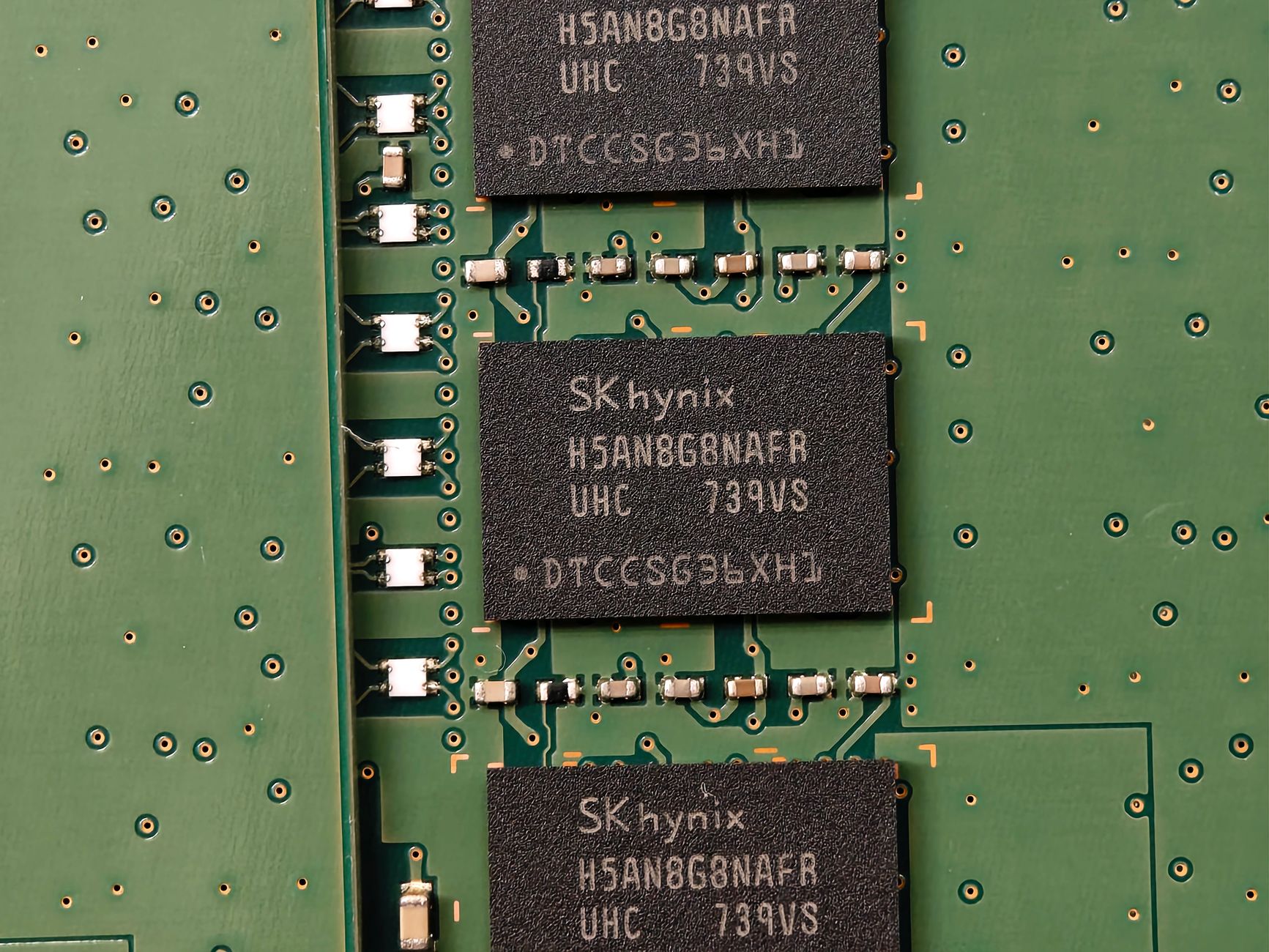
SK Hynix's Nasdaq debut tests the next leg of the AI trade
SK Hynix Nasdaq listing gives U.S. investors direct access to the AI memory boom while testing the won, valuations and chip appetite.
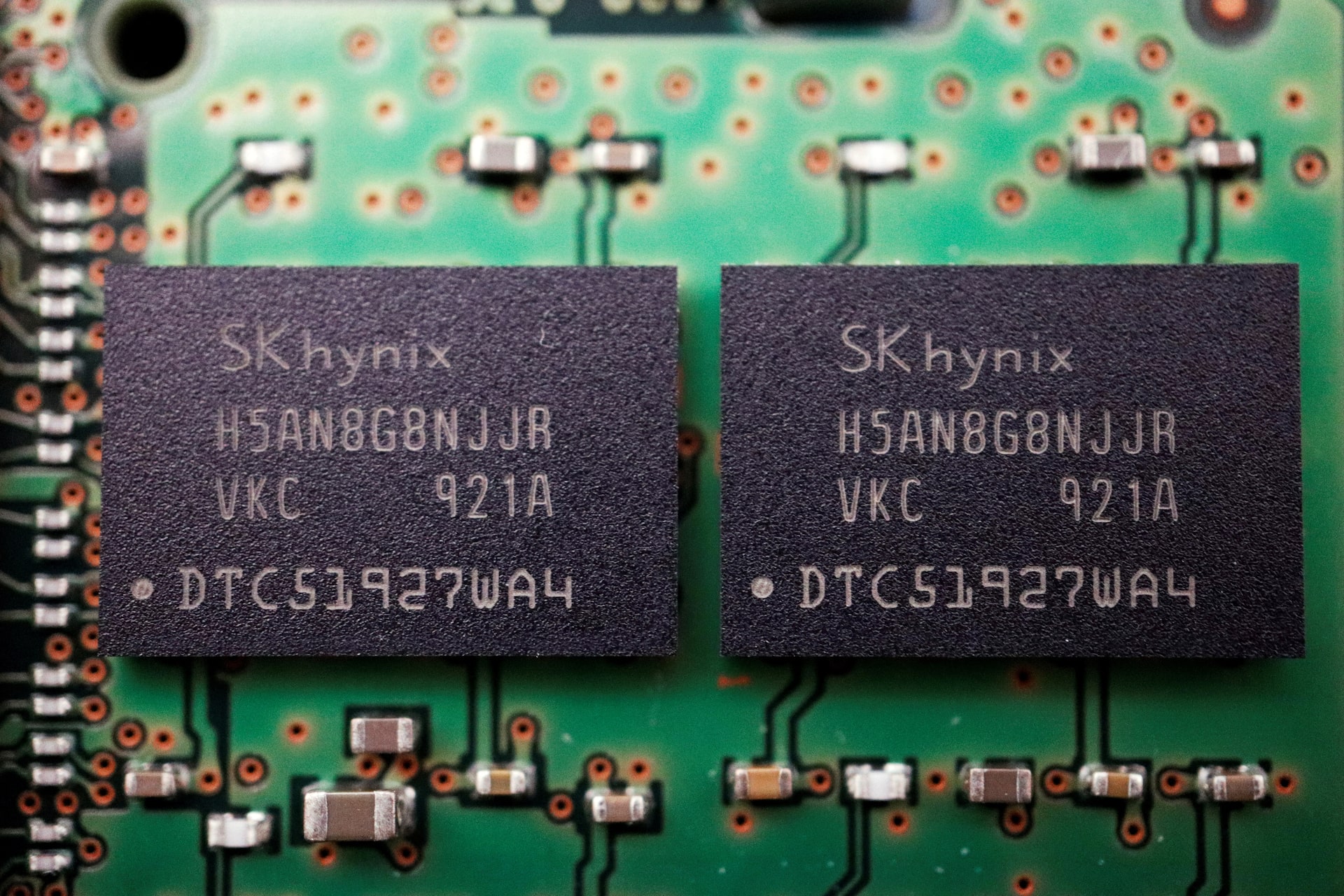
SK Hynix is launching an about $29 billion Nasdaq listing on Monday, giving U.S. investors a direct line into the AI memory trade as chip stocks try to steady after a volatile start to the third quarter.
The scale makes this look larger than another overseas share sale. SK Hynix is bringing one of Nvidia’s key high-bandwidth-memory suppliers to the market where AI hardware has found the richest bid, while testing whether its valuation can move closer to Micron’s in front of a deeper U.S. buyer base. Bloomberg pegs the valuation at about $29 billion, while filing-based terms point closer to $28 billion. The gap is small, but it gets to the point of the exercise: price discovery matters almost as much as the cash.
The offering targets investors who currently lack access to the Korean equity market.
Source: Di Zhou, Bloomberg Markets
Seoul sees another layer. South Korean officials are preparing for currency flows tied to the listing, because some proceeds could be converted back into won, turning a corporate financing into a small test of Korea’s capital-market plumbing. The policy angle matters because a foreign listing can support the currency only if money is repatriated and hedged in size. Otherwise it mostly confirms that Korean champions still need Wall Street to reach the broadest AI investor pool.
For U.S. allocators, the appeal is plain enough. The second-quarter chip rally added roughly $2 trillion in combined value to Micron, Intel and AMD as investors widened the AI trade beyond Nvidia, and memory names became one of the cleanest ways to play that expansion. A U.S. listing gives funds that do not routinely buy Korean equities a simpler route into that theme, through a company already treated as a direct read-through on AI server demand.
What U.S. investors are buying
At the center is a repricing bet, not a claim that SK Hynix becomes a different company once it trades in New York. The market may value the same earnings stream differently once it sits closer to U.S. capital, U.S. trading hours and the benchmark frameworks that already shape how AI money moves.

Bloomberg says SK Hynix trades at about 6.2 times next-12-month earnings versus roughly 7 times for Micron, and Seeking Alpha’s analysis argues the U.S. line could help close part of that gap by broadening liquidity rather than by changing the underlying business overnight. The listing is not only a fundraise. It is a valuation event aimed at investors who want direct exposure to the part of the semiconductor chain that has benefited most obviously from the AI server build-out.
We are in a time of extreme enthusiasm about chip stocks.
Source: Daniel Morgan, Bloomberg Markets
Memory has become the bottleneck investors can actually price. CNBC reported that years of underinvestment before the AI surge helped create today’s supply tightness, which means portfolio managers are buying more than a generic semiconductor story when they buy SK Hynix or Micron. Their wager is more specific: AI server demand has to stay strong enough to preserve pricing power in a business once judged mostly on its next downturn.
Deal mechanics reinforce the point. Terms reviewed in the listing documents show 17.79 million new shares will be sold, with each common share represented by 10 ADRs, while an earlier Bloomberg report said SK Hynix was weighing a 0.5 per cent fee payout to banks on the transaction. Those are the details of a carefully engineered capital-markets event, not a symbolic foreign float. Smooth execution could make SK Hynix easier to compare, pair and trade against Micron across a cycle that investors increasingly see through an AI lens.
A broader Asian IPO problem sits behind the same logic. CNBC’s analysis of why Asia still struggles to produce mega-IPOs at home argues that even large issuers often look to U.S. markets when they want the deepest technology investor base and the strongest valuation language. SK Hynix is not a start-up chasing a glamour multiple, but it is making the same calculation: when the hottest pool of capital is in New York, a Korean issuer can decide that crossing markets is cheaper than staying local.
Why Seoul is watching the dollars
The policy case is subtler, and it may prove almost as important. Bloomberg’s reporting on Korea’s currency preparations suggests officials expect at least some listing proceeds to move back into won. That answers one central policy question only partway: the deal can help the currency at the margin, but only if repatriation is meaningful and not largely offset by hedging or other corporate dollar needs.

In that sense, the transaction is a referendum on market openness as much as on exchange rates. The emergence of geared ETF products tied to SK Hynix has already been large enough to magnify local swings, a sign of how concentrated the domestic trade had become before a U.S. float. A successful Nasdaq debut could broaden the investor base and reduce some of that concentration risk. It could also sharpen an awkward question for Seoul: if the country’s flagship AI hardware companies still need Wall Street for efficient price discovery, what does that say about the domestic market’s ability to absorb the next wave of chip financing?
Officials may tolerate that tension for strategic reasons. Only days ago, Samsung and SK Hynix were part of a broader South Korean spending push tied to AI and semiconductors, and a related industry report said South Korean technology groups had pledged more than $550 billion of new investment to ease memory bottlenecks. If SK Hynix can pull U.S. capital into that build-out without destabilising the won, Seoul gets both an external funding valve and a stronger case that its AI hardware push can be financed across borders.
Capital moves in a loop here. U.S. money helps fund Korean fab expansion, Korean chip capacity supports the AI build-out, and the resulting earnings growth feeds back into U.S. valuation multiples. It sounds like plumbing because it is plumbing. In semiconductor cycles, the way capital moves often tells investors more than a slogan about technological leadership.
The real test for the AI trade
The skeptical read is that all of this arrives late. Chip stocks that surged in the second quarter started the third quarter with a dud, and the recent wobble has reminded investors that AI enthusiasm does not erase normal cycle risk. Memory is especially vulnerable because it can look structurally scarce one quarter and dangerously well supplied a few quarters later if capital spending outruns demand.
You have to be very careful investing in anything that’s up the way these stocks have climbed.
Source: Ed O’Gorman, Bloomberg Markets
The warning is not just about sentiment. MarketWatch’s profile of Micron’s rise to the center of the AI boom argues that memory has moved from a commodity backwater to a market investors treat as strategic infrastructure. The upside to that shift is obvious: Micron and SK Hynix now capture a much larger share of the AI narrative. The risk is that once a cyclical business gets priced like infrastructure, investors start demanding flawless execution, disciplined capacity additions and a long runway of AI spending all at once.
Capex is the question skeptics cannot ignore. An earlier Bloomberg report said the listing could help finance SK Hynix’s build-out, and that is bullish only if new fabs arrive into durable demand rather than a market already front-running perfection. Fresh money can reinforce a shortage cycle. It can also bring forward the supply response that eventually flattens margins. In that sense, the listing is part of the mechanism that could extend the memory cycle or bring it back toward normal.
The order book should reveal which side of that trade is stronger. If U.S. demand comes in hard, the message will be that investors still want fresh AI hardware exposure even after the quarter’s volatility, and that the memory trade has room to absorb another large name beside Micron and Nvidia proxies. If demand feels more measured, the conclusion changes: the market may still believe in AI, but it is no longer willing to pay up automatically for every chip story attached to it.
The headline size is only the surface. The listing sits at the intersection of four live arguments at once: whether U.S. investors still reward direct AI exposure, whether SK Hynix can narrow its discount to Micron, whether Seoul can turn an outbound equity sale into supportive currency flows, and whether fresh capital extends the memory boom or sows the next supply response. A normal overseas listing answers one of those questions. This one may answer all four.
Naomi Voss
Banks and deals reporter covering bank earnings, fintech, M&A and IPOs. Reports from New York.