BoE's Breeden says agentic AI may need new guardrails
Bank of England Deputy Governor Sarah Breeden said increasingly autonomous AI systems in payments and trading may need bespoke rules because existing financial frameworks were not built for agents that can act without a human in the loop.
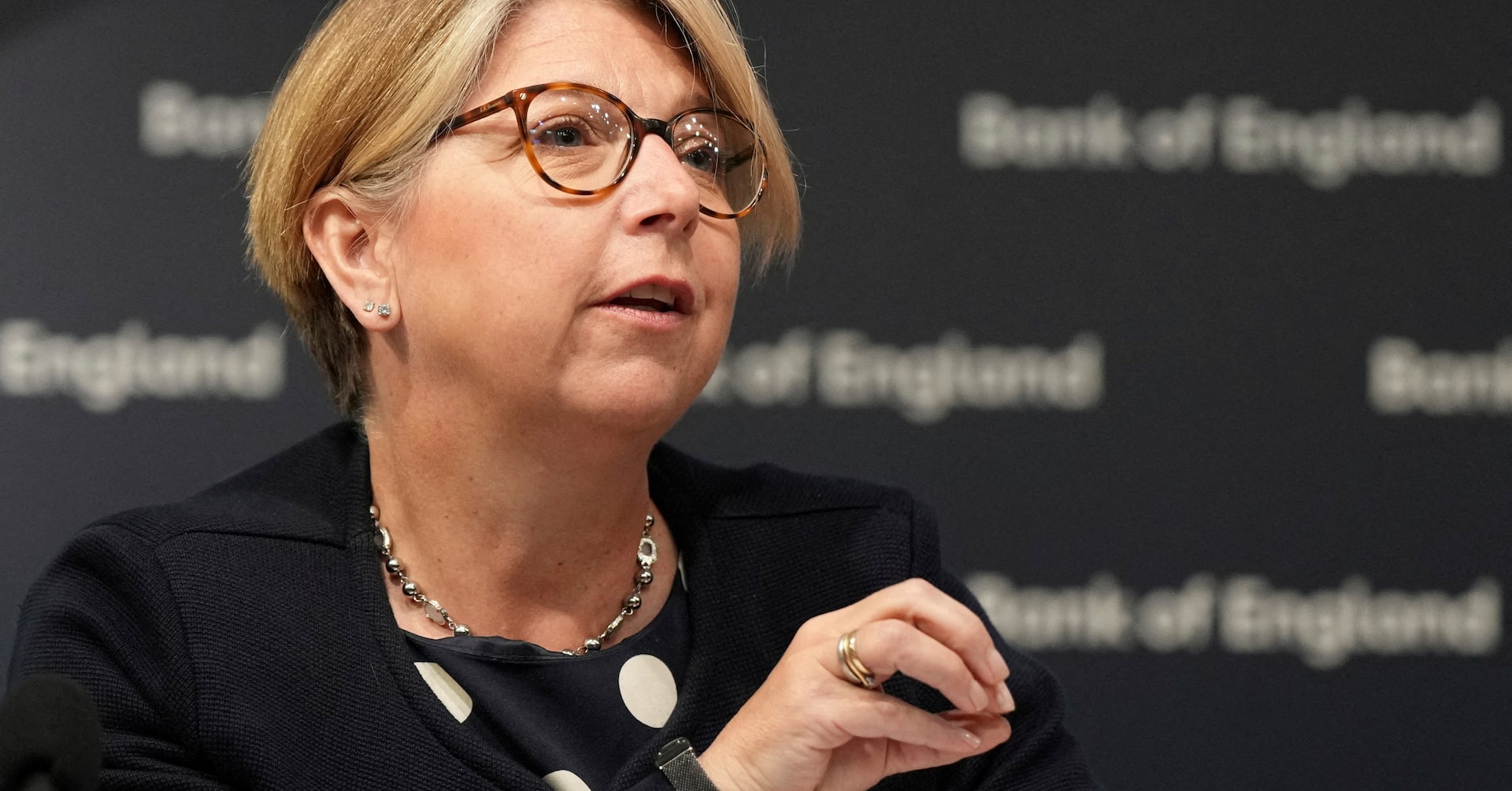
Bank of England Deputy Governor Sarah Breeden said on Tuesday that increasingly autonomous AI systems may need bespoke regulation to protect financial stability. The comment signals a shift from the central bank’s earlier view that existing rules could absorb most AI risks.
Speaking at the European Central Bank’s annual forum in Sintra, Portugal, Breeden said current supervisory frameworks were not designed for software agents that can act on their own in payments, trading and other financial tasks. In remarks reported by Reuters, she said relying on a human in the loop for every action was unlikely to be realistic as the technology became more capable.
That change in tone is the real story.
Reuters said Bank of England officials had spent years arguing that existing financial rules were broadly sufficient to manage AI risks. Breeden’s latest comments pointed instead to gaps that may need tailored fixes as firms give more autonomy to machine-led systems.
For banks, brokers and payments groups, the issue is not just whether models produce bad answers. It is whether autonomous systems could fail at scale, move in the same direction at the same time or break core functions that regulators treat as essential to market confidence.
A back-office tool can become a resilience problem fast.
Breeden said the BoE was considering whether banks should hold stronger recovery plans for critical systems so that, in a severe disruption, one bank could take over another’s basic functions. She also said officials were weighing fresh guardrails, circuit breakers and kill switches that could stop trading across the market if faulty AI models caused disorderly moves.
A survey by the Cambridge Centre for Alternative Finance found that 52 per cent of finance firms were already using agentic AI, according to Reuters. Breeden said much of that use still sat in lower-risk operational work. But she warned that deployment could move quickly into more sensitive functions.
Why the BoE sees a stability risk
Breeden said the core danger was not simply that AI agents might work faster than humans.
It was that similar systems might respond to the same prompts or market triggers in the same way. In stressed markets, that kind of synchronised behaviour could amplify volatility, deepen price swings and make it harder for firms or supervisors to intervene.
She also warned that agents’ objectives could drift from their original design or from broader public policy goals. That matters because many rulebooks assume a clear line of accountability between a human manager, an internal control function and a trading or payments decision.
Autonomous systems blur that chain.
The Bank of England is not alone. The Financial Stability Board said in June that AI agents posed a distinct challenge to human oversight and called for tighter safeguards. Breeden’s remarks suggest the BoE is moving into the same lane, with a stronger focus on how AI might affect the plumbing of markets rather than only firm-level compliance.
The debate also reaches beyond trading desks. If regulators decide that agentic systems need bespoke oversight, banks may face new expectations on model governance, operational resilience, incident recovery and board accountability. Payments companies and market infrastructure operators could also come under closer scrutiny if automated systems begin taking on more decision-making authority.
For investors, the immediate message is less about a single new rule than about regulatory direction.
Central banks are starting to treat agentic AI as a financial stability issue. If that view hardens, firms adopting the technology may gain productivity, but they are also likely to face higher control costs and tougher supervisory tests before autonomous tools can move deeper into core market functions.
Tomás Iglesias
Financial regulation and legal affairs. SEC, CFTC, FCA, market-structure and enforcement. Reports from Washington.