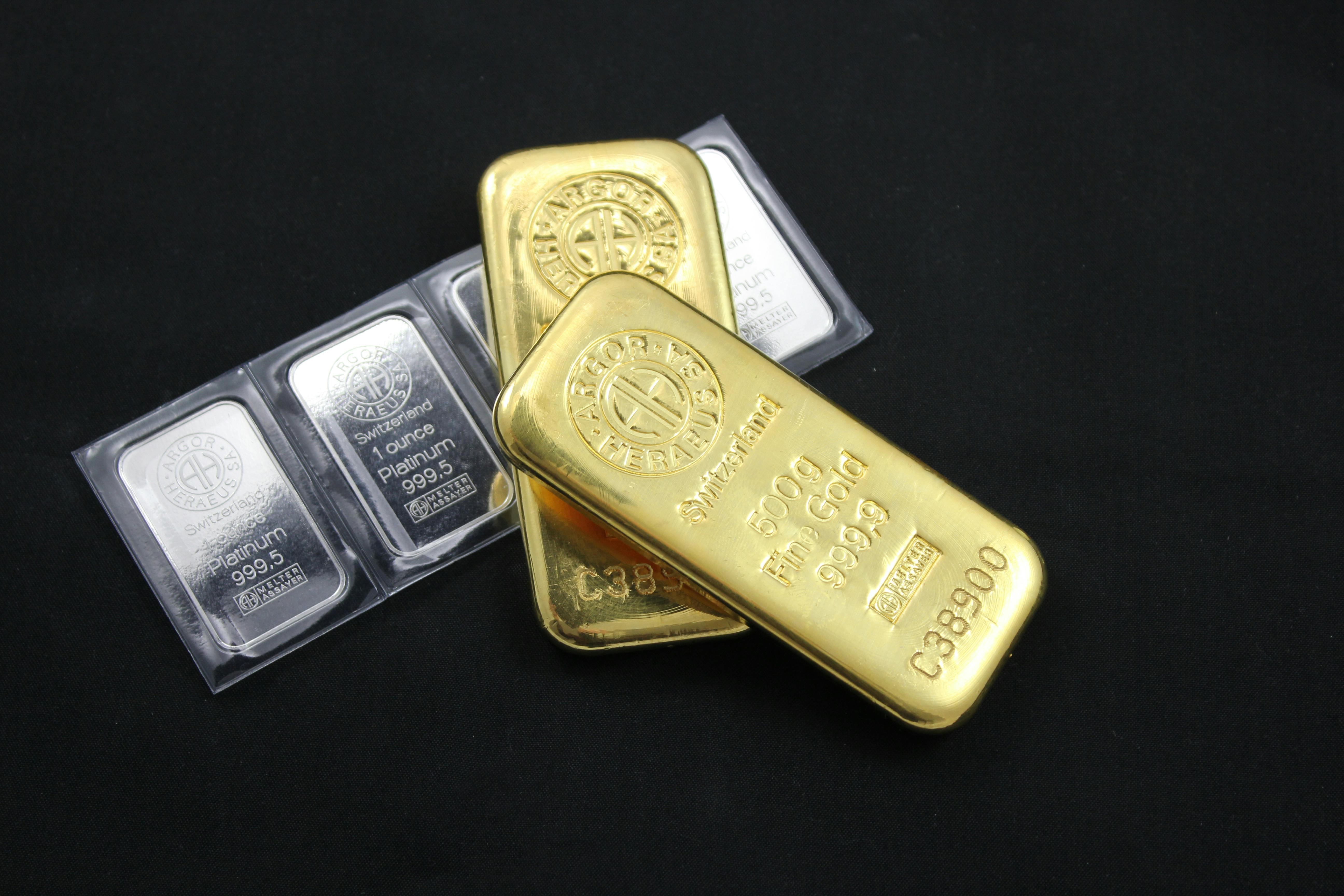
Goldman’s gold cut puts the Fed back in charge of bullion
Gold price outlook 2026 shifted lower after Goldman cut its year-end target to $4,900 as the Fed’s hawkish reset pushed yields and the dollar higher.

Goldman Sachs slashed its December gold target by $500 to $4,900 an ounce this week, a move Bloomberg Markets tied to the bank’s decision to remove any expectation of Federal Reserve rate cuts in 2026. For bullion strategists, the cut matters less as a headline downgrade than as a clear statement about regime change. Gold is being priced like a rates trade again. If the Fed no longer looks ready to ease, the metal has to overcome a firmer dollar and higher real yields before geopolitical anxiety can do much work.
On the screen, the tape backs that interpretation. Spot gold was quoted at $4,169.44 in Reuters’ June 19 market report and was heading for a third straight weekly loss as the dollar stayed firm after the Fed meeting. A market that had treated Middle East risk as an automatic tailwind is now rewarding the opposite variables. Goldman’s reset says the old shortcut, buy gold because the world looks dangerous and the Fed will blink, has broken down at least for the second half of the year.
Rates traders read the same price action more skeptically than gold bulls do. After Kevin Warsh’s first meeting as chair, the two-year Treasury yield rose to 4.179 per cent and the 10-year to 4.453 per cent, according to CNBC. A MarketWatch analysis traced the same chain across markets, higher yields lifted the dollar and bullion slipped. That answers one of the skeptics’ questions almost in real time: when the front end of the curve moves back above 4 per cent, gold needs more than a safe-haven story to justify a target that still starts with a four.
Elsewhere, policy watchers see a second shift inside the same move. The New York Times’ live coverage said the Fed held rates at 3.5 per cent to 3.75 per cent, removed earlier language that had left room for cuts and produced no dissents. The message was hawkish on substance, but also hawkish in style. Markets got less forward guidance just as they were trying to decide how much of the gold rally had depended on easier money.
A hawkish Fed resets the trade
If gold is going to recover from here, it may need softer data rather than softer phrasing. Warsh’s first meeting told investors that patience still sits with the central bank, not with traders betting on quick relief.
In remarks carried by CNBC, Warsh said policymakers should not lean on the dot plot as a personal promise.
“I did not submit a dot for me,” Warsh said. “It’s not helpful in the conduct of policy.”
— Kevin Warsh, via CNBC
For bullion, the implication is straightforward. A less signposted Fed keeps real yields elevated by default because traders cannot confidently frontrun a cutting cycle that the chair refuses to sketch out. They have to wait for the labour market, inflation or credit conditions to force the committee’s hand. Until one of those cracks appears, the dollar keeps a support that safe-haven demand alone has struggled to overwhelm. Bullion is left reacting to policy, not escaping it.
Chris Rupkey, chief economist at FWDBONDS, put the macro view more bluntly in the same CNBC report.
“The economy is facing no material downside risks at present so Fed policymakers can hold rates steady and do nothing,”
— Chris Rupkey, via CNBC
Rupkey’s point goes directly to the policy question inside this trade: how much did a no-dot, no-forward-guidance meeting move rate-cut odds? Enough that Goldman rewrote a year-end bullion call. Enough that two-year yields pushed back toward a zone where non-yielding assets look expensive. Enough that traders stopped treating war risk as a sufficient catalyst on its own. Byron Anderson captured the regime shift when he said markets were going “back in history to when markets react to the Fed and not the Fed reacting to markets.” Goldman’s cut reads like the commodities version of that argument.
The structural bull case is still there
Longer-dated gold bulls have not disappeared. They are arguing on a different clock, and on different evidence.

On the structural side, both J.P. Morgan’s commodities research and the World Gold Council’s 2026 outlook still lean on reserve diversification, geopolitics and official-sector demand as reasons bullion should stay structurally well bid beyond the next few quarters. A CNBC report this week added a concrete sign of that demand, finding that central banks are bringing more of their reserves home and still expect to add to holdings as geopolitical risk rises. The long-run bull case is alive, but it now has to do more of the work.
By contrast, the strategists’ other question, how much of the upside now depends on central-bank buying rather than Fed easing, probably has a different answer than it did a month ago. Gold can still attract sovereign demand even when US policy stays tight. What it cannot do as easily is sprint back toward aggressive bank targets while the front end of the Treasury curve and the dollar are both moving the wrong way. Tactical bears and structural bulls are now looking at the same metal through two different lenses.
The tactical camp sees a market repricing higher real rates and a more confident Fed, which is why a $500 cut to a sell-side target looks rational rather than dramatic. The structural camp sees reserve managers, diversification flows and a world still willing to hold more bullion at the margin even if US Treasuries offer higher cash returns. Both views can coexist for a while. They just point to different entry points, different holding periods and different catalysts.
Viewed practically, the takeaway for investors is narrower than the geopolitics-heavy narrative that carried gold earlier in the year. The next durable leg higher probably needs one of three things: weaker US data, a visible turn in Fed language, or a fresh acceleration in official-sector buying large enough to offset the drag from yields. Absent that, Goldman’s lower target looks less like capitulation than a warning. Bullion has reverted to its hardest trade, the one where the Fed sets the pace and everyone else follows.
Sloane Carrington
Markets columnist. Analytical pieces and deep-dives on monetary policy, capital flows and corporate strategy. Reports from New York.