Starlink's American Airlines win adds to SpaceX's IPO case
American Airlines' Starlink deal adds a fresh enterprise proof point to SpaceX's IPO story, but it does not settle the valuation debate.
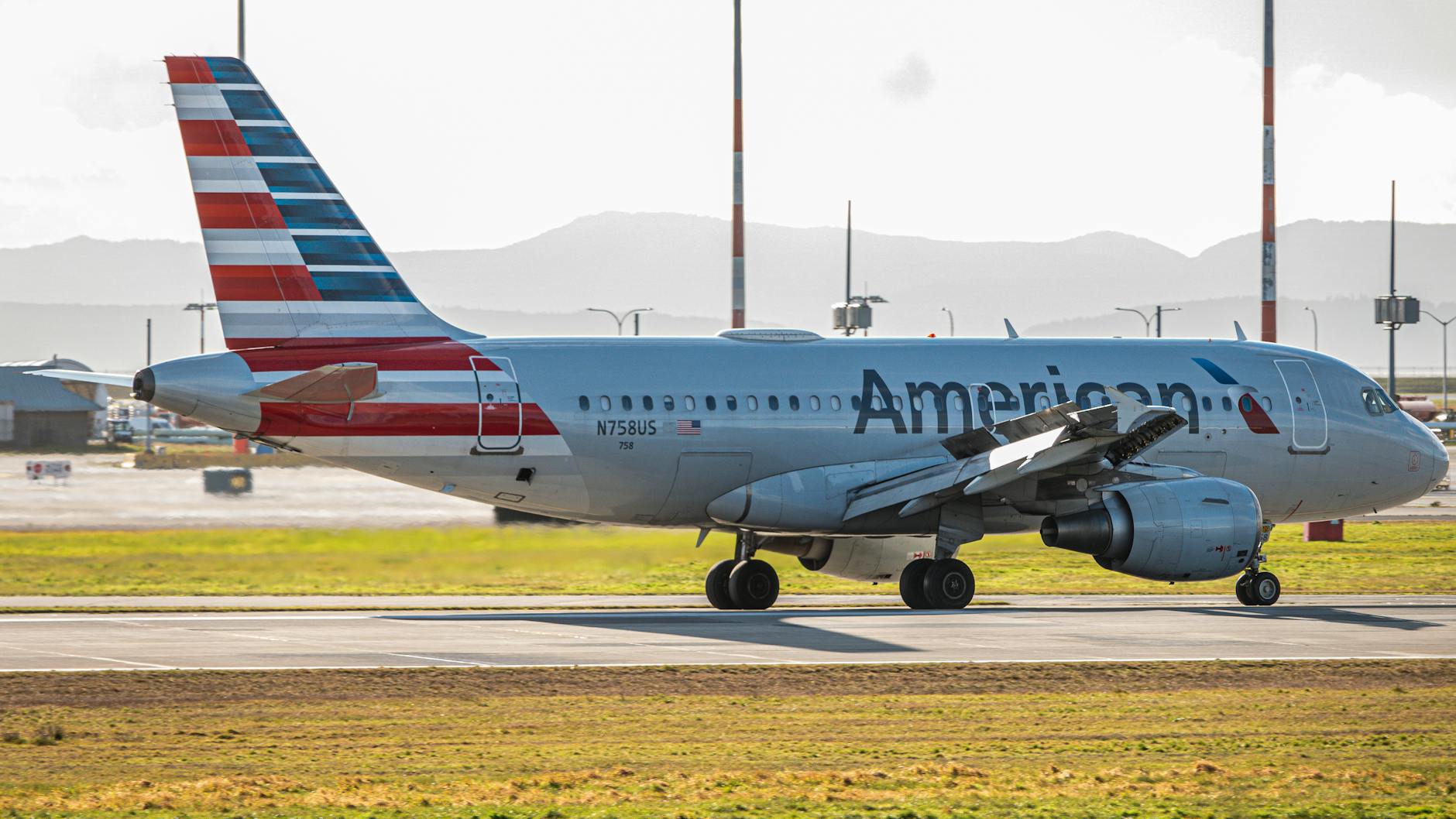
American Airlines said it will fit SpaceX’s Starlink across more than 500 narrow-body aircraft from Q1 2027, handing the satellite-internet business another high-visibility enterprise customer just as investors decide how much of SpaceX’s IPO case rests on recurring connectivity revenue rather than rockets.
The contract reads as a passenger-service upgrade from the airline’s side. From the market’s side, it looks like one more data point in favour of Starlink’s claim to be the cash engine inside SpaceX. The company’s S-1 filing showed Starlink generated $11.387 billion of revenue in 2025, out of $18.674 billion consolidated, making connectivity the business that investors will scrutinise most closely when the company lists.
That same filing supports the analyst’s case, but it also sharpens the skeptic’s. CNBC’s reporting on the prospectus said Starlink accounted for 61 per cent of SpaceX sales last year, a mix that makes every airline, maritime and enterprise contract feel more consequential. Yet NPR reported that TMF Associates’ Tim Farrar sees the valuation story as unusually dependent on belief in Elon Musk, not only on the operating numbers. A new airline logo helps the narrative. It does not settle the valuation argument.
The airline Wi-Fi race
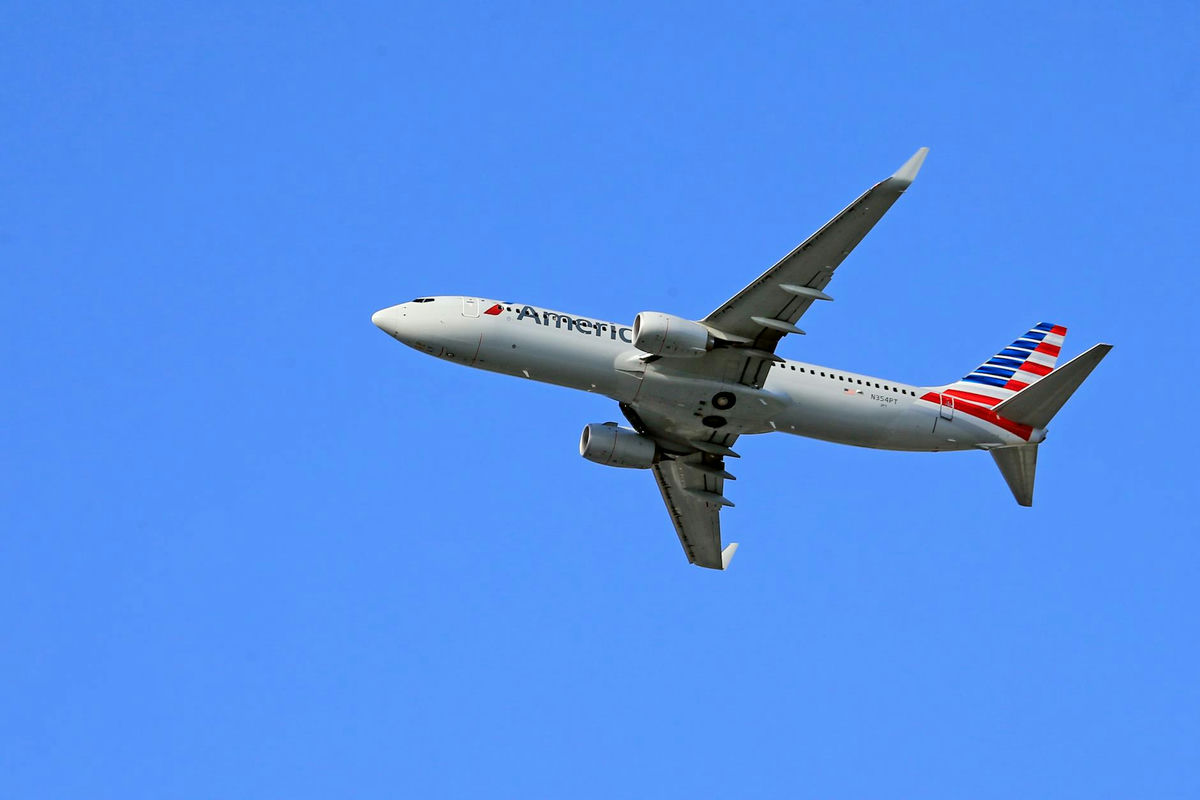
American’s decision is easiest to understand from inside the cabin. Airlines do not buy faster onboard internet because satellite technology looks elegant in a prospectus. They buy it because business travellers notice dead zones, login delays and video that stutters on short domestic hops. The Verge reported that American plans to start the rollout in the first quarter of 2027 and extend it across more than 500 aircraft, including its Airbus A321XLR and A321neo fleets.
In American’s own pitch, the upgrade is about keeping premium passengers connected rather than collecting a technology badge. American said the service will be offered free to AAdvantage members starting in Q1 2027, and The Verge quoted chief customer officer Heather Garboden as saying:
“The addition of Starlink solidifies American as a leading airline in keeping passengers connected in flight.”
— Heather Garboden, American Airlines chief customer officer
That insider perspective matters because it explains why these contracts have become a small but telling theatre in commercial aviation. CNBC noted that SpaceX already has agreements with United Airlines, Southwest and other carriers. The contract value was not disclosed, but the commercial logic is clear enough: once an airline markets faster, more reliable Wi-Fi across a big narrow-body fleet, rivals are pushed to match it or justify why they have not.
The competitive frame matters as well. Onboard connectivity has long been defined by capacity bottlenecks, patchier coverage and a passenger experience that often collapsed the moment a flight filled up. Starlink’s selling point is that a low-Earth-orbit network can offer lower latency and more usable bandwidth at cruising altitude. That does not guarantee permanent share gains, especially with Amazon and incumbent providers still chasing the same fleets, but it helps explain why a 500-aircraft commitment says more about commercial traction than a smaller corporate-aviation deployment would.
The result is a more useful signal for investors than a travel-feature headline might imply. Airline connectivity contracts are sticky, visible and tested daily by passengers who complain immediately when the product fails. They are also enterprise wins in a segment where legacy providers once dominated and where newer low-Earth-orbit networks, including Amazon’s aviation push, are trying to prove that lower latency can hold up at scale. For the analyst trying to answer whether a steady flow of airline deals can support a premium versus launch-only peers, the partial answer is yes: recurring service revenue is easier to underwrite than a launch calendar. It is still only a partial answer because contract duration, pricing and margins remain private.
The revenue argument
The timing matters because the American announcement landed only days after SpaceX’s filing moved the debate away from rockets and toward revenue quality. TechCrunch wrote when the S-1 arrived that Starlink had generated more than half of SpaceX’s revenue in 2025, and The Verge’s filing coverage pointed to the same imbalance more directly: the launch business may define the brand, but satellite internet is doing more of the financial heavy lifting.
That is why this contract matters more qualitatively than quantitatively. One airline order will not transform a company that already generated $18.674 billion of revenue in 2025. But it gives bankers and growth investors another real-world example of Starlink selling something other than consumer broadband or launch-adjacent capacity. Aviation is an especially attractive proof point because the service quality is hard to fake. Passengers either can stream, message and work reliably at 35,000 feet, or they cannot.
For equity markets, the attraction of contracts like this is their ordinariness. A launch can slip. A constellation can produce headlines without proving a paying customer base. An airline agreement is mundane in the best possible way: it implies installation schedules, billing relationships and service renewals that can be modelled quarter by quarter, even if outside investors still lack the exact unit economics.
History adds weight to that interpretation. When NPR described SpaceX’s filing as the likely setup for the biggest IPO in history, the implicit question was not whether SpaceX is a famous company. It was whether the company can show enough businesses inside the holding structure to justify public-market appetite on a scale more often associated with mature platform companies. Airline connectivity will not carry that argument by itself. It does, however, fit neatly into the broader case that Starlink is becoming a terrestrial subscription business built on orbital infrastructure.
That is also why the Financial Times argued that the market has rarely had to price a company so large and so speculative at the same time. Investors can see the top line. What they still need to infer is how much of that revenue is durable, how much is cyclical, and how much depends on businesses that can keep adding customers without the publicity machine around Musk. American Airlines does not answer those questions completely. It pushes the evidence a little further in SpaceX’s favour.
The valuation gap
The skeptic’s case survives because visibility is not the same thing as disclosure. NPR’s interview with Tim Farrar captured the blunt version of that concern:
“The valuation is completely dependent on the degree to which people believe in Elon Musk.”
— Tim Farrar, TMF Associates
That line lands because the American contract does not tell investors what they most want to know. It does not reveal the revenue per aircraft, the margin profile of aviation service, the cost of equipping each plane or the duration of the agreement. Even with more than 500 aircraft in the rollout, the market is still inferring economics from customer momentum and from the broader filing rather than from contract-level disclosure.
Still, it would be too neat to say the deal is just halo effect. The point of customer wins is not that each one closes the valuation gap on its own. The point is that they make it harder to dismiss Starlink as a story stock propped up only by launch glamour, government ties or Musk’s personal mystique. Bloomberg’s coverage cast the announcement as part of an industry race over onboard connectivity. Read through an IPO lens, that race shows something more important: Starlink is still taking share in a category where customers have alternatives and end users complain loudly when a service disappoints.
For American, the decision is about retention, brand perception and a better cabin product. For SpaceX, it is another enterprise proof point at a moment when investors are trying to decide whether Starlink deserves to be valued like a durable communications platform rather than as a supporting business inside a rocket company. The new contract does not make that verdict obvious. It does give the bull case a fresher operating fact to lean on.
Sloane Carrington
Markets columnist. Analytical pieces and deep-dives on monetary policy, capital flows and corporate strategy. Reports from New York.