Politics is back to breaking emerging-market rallies
Emerging markets political risk is hitting currencies, bonds and equities together, forcing investors to reprice carry trades.
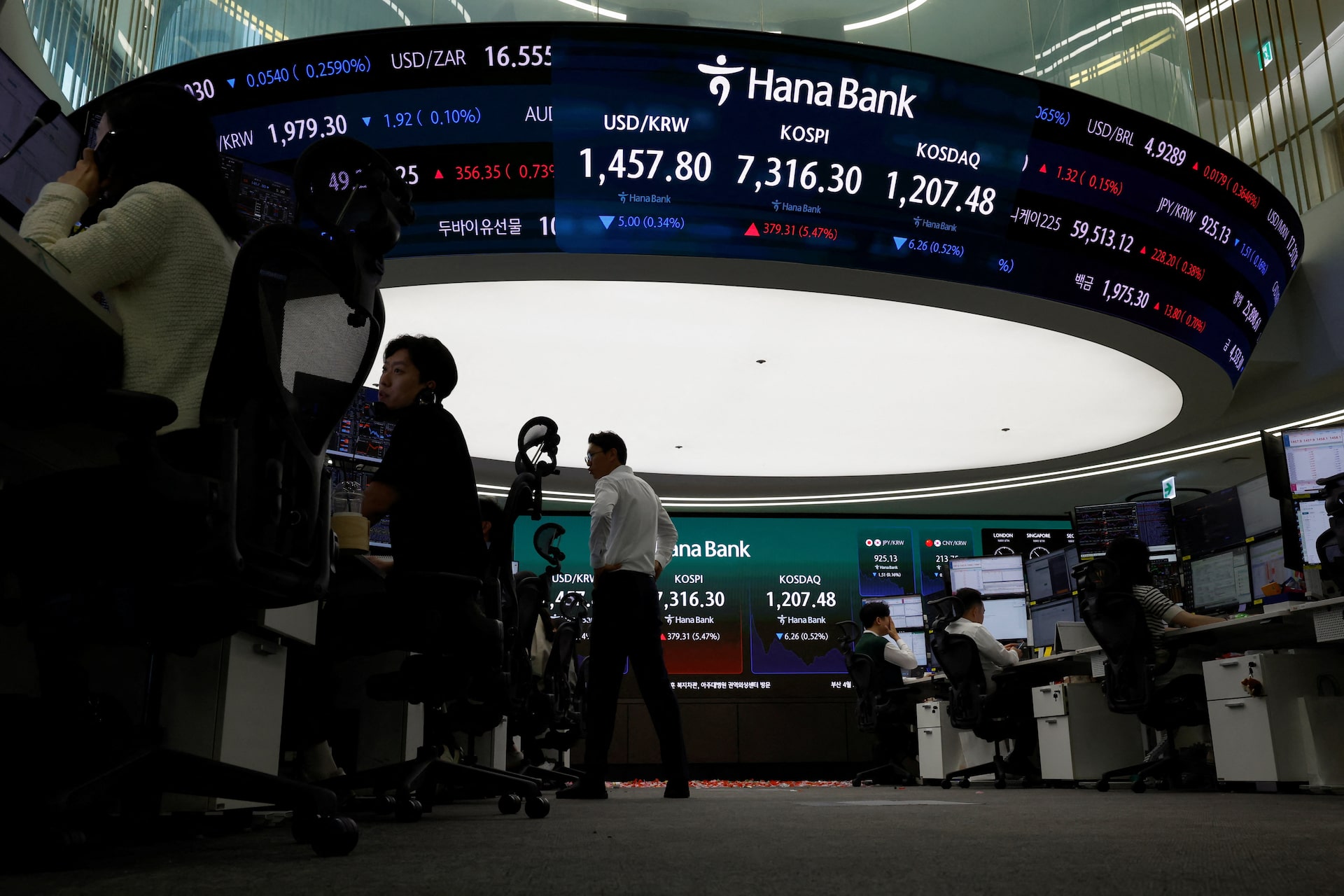
Emerging-market investors had treated politics as the quiet variable this quarter. That assumption is breaking down. A fresh wave of turmoil from Latin America to Turkey is hitting currencies, local bonds and equities together, puncturing one of 2026’s cleaner trades: owning carry, clipping yields and assuming domestic politics would stay in the background.
Back in March, even a shock that wiped more than $1 trillion from MSCI emerging-market equities at the lows did not force investors out of the asset class. Many money managers treated higher US yields and Middle East headlines as volatility to ride through. What has changed, and what Reuters flagged as early as January in its 2026 market watch list, is that domestic politics is re-entering the pricing equation while US rates are still restrictive.
From the insider vantage, that still does not amount to capitulation. Local authorities can slow disorderly moves, and traders know it. Even so, Turkey’s market rout after a court unseated the main opposition party’s leader showed how quickly that argument runs into its limit when politics and liquidity collide.
In Bogotá, Ankara and Lima, the triggers differ. Markets are beginning to price them with the same instinct.
Seen from the portfolio level, the message is larger than any one country. Colombia, Peru and Bolivia are not interchangeable, and Turkey has its own institutional story. The common thread, though, is clear: investors had been paying for macro risk and underpricing political risk. Once that balance flips, the carry trade demands a much higher country-risk premium before it looks attractive again.
Carry trades now need a wider margin
Analysts are not arguing that emerging markets have suddenly become uninvestable. They are arguing that the hurdle rate has moved. When local politics is stable, the asset class can absorb a fair amount of global noise. Once politics starts driving price action, every yield pickup has to clear a higher bar.

In reporting on the selloff, Francesc Balcells, chief investment officer at FIM Partners, put it plainly:
Political risk manifests itself when the macro is under pressure… I wouldn’t be surprised if we see more of that going forward.
Francesc Balcells, FIM Partners, quoted in The Star (May 26)
That line matters because political shocks do not have to create the macro pressure by themselves; they only have to arrive when buffers are thinner. At that point, the analyst perspective and the skeptic perspective start to overlap. One asks how much extra premium investors need to keep buying the dip. The other asks whether the rally ever deserved such a thin premium in the first place.
Across Colombia, Peru and Bolivia, Bloomberg’s main account of the latest move shows election risk and governance uncertainty pulling local assets off course. Colombia’s local bonds have lost 4.4 per cent over the past month as politics clouded a market that had been enjoying the carry. Peru and Bolivia matter less because they are huge benchmark weights than because they show how quickly polling noise, institutional fragility and policy speculation can become a regional positioning problem.
For Latin America, the better frame is not a country-by-country list but a polling trade. Once the region starts trading on incomplete surveys, outsider candidates and unpredictable coalitions, the price action stops looking like fundamental repricing and starts looking like insurance. Investors are no longer just asking which country has the highest real yield. They are asking which country can still deliver that yield without a political headline turning it into a capital-loss problem.
From a wider angle, Reuters made a similar point in March when it reported that investors still believed emerging markets could withstand Middle East-driven shocks and higher developed-market yields. That resilience was real, but it was conditional. External stress is easier for a market to absorb than a domestic surprise that changes the policy path, the reform outlook or the rules of the game.
March provides the baseline. The selling linked to regional conflict cut more than $1 trillion from MSCI emerging-market equities from peak to Wednesday close, according to Reuters’ reporting on that drawdown. Investors still treated that move as externally generated and reversible. Politics is harder to dismiss because it can hit the same bond, FX and equity book at once while also changing the policy case that justified owning it.
Turkey shows where intervention stops helping
In Turkey, the argument compressed into a single week. Politics triggered the move, markets repriced instantly, and the state stepped in before the dust had settled.

After a Turkish court removed the leader of the main opposition party, the country’s five-year credit-default swaps widened 19 basis points to 261 basis points, and the Borsa Istanbul 100 Index fell 6.1 per cent. Bloomberg then reported that state lenders sold about $6 billion to defend the lira. That is the insider perspective in action: authorities can still lean against disorder.
Intervention is not reassurance. It answers the immediate liquidity question while opening a deeper credibility question. If a market needs billions of dollars of state support after a domestic political ruling, foreign investors are left asking whether they are being compensated for a temporary shock or for a recurring regime feature.
In Bloomberg’s Turkey coverage, David Austerweil, emerging-markets deputy portfolio manager at VanEck Associates, put the point more bluntly:
The buffer is wearing thin.
David Austerweil, VanEck Associates, Bloomberg (May 21)
Read literally, the remark answers the insider question about whether intervention can stabilise markets without scaring away foreign money. Yes, it can stabilise them for a session or two. No, it does not restore the old valuation case by itself. The very need for intervention tells investors that the cushion has shrunk.
Just as important, Turkey exposes the weakness in the “macro is improving, therefore politics matters less” argument. In theory, disinflation progress and tighter orthodox policy should make local assets more investable. In practice, markets discount those improvements when political intervention raises the odds of renewed volatility. The better the macro story had looked, the more jarring the repricing becomes when politics overrides it.
Politics is trading like macro again
Across portfolios, politics is no longer a side variable for emerging-market investors. It is behaving like macro again: capable of moving currencies, rates and equities simultaneously, and capable of swamping bottom-up narratives in countries that had benefited from the reach for yield.
In coverage of the emerging-market selloff, Alexander Robey, a portfolio manager at Allianz Global Investors, captured that uncertainty:
It’s difficult to read these outcomes with a very strong degree of certainty - that makes it very difficult to trade or position around.
Alexander Robey, Allianz Global Investors, quoted in The Star (May 26)
For portfolio managers, that is the headache. Investors do not need political outcomes to be friendly; they need them to be legible. Once the distribution of outcomes becomes harder to map, the cheap part of the trade disappears. At that point, the skeptic’s argument looks less cynical and more practical: perhaps the rally looked cleaner than it was because volatility had been suppressed, not because risk had genuinely faded.
A second layer sits underneath. Reuters’ January 2026 watch list put political risk beside the Fed succession and AI as one of the defining market themes of the year. At the time, that read like a broad warning rather than an immediate trading call. It now looks more like a description of how emerging markets are being repriced. Politics is not replacing the macro story. It is attaching itself to it.
Bloomberg’s podcast discussion of the latest jitters points the same way. Investors are starting to position for the possibility that politics will keep showing up in clusters, across regions, before markets have finished digesting higher US yields and slower global growth.
Put differently, emerging markets are becoming less of a blanket beta trade and more of a sorting exercise again. Countries with credible institutions, clearer election paths and deeper local buffers may still attract money. Countries that looked investable mainly because volatility was low will struggle harder. That is a tougher environment for broad-brush optimism, but it is not the same as a wholesale exit from the asset class.
For portfolio managers, the lesson is not to stop owning emerging markets. It is to stop treating politics as free optionality. The rallies being derailed now were built on the assumption that domestic shocks would stay containable. The latest moves in Latin America and Turkey suggest that assumption has expired. In 2026, the carry is still there. The cushion is not.
Sloane Carrington
Markets columnist. Analytical pieces and deep-dives on monetary policy, capital flows and corporate strategy. Reports from New York.