S&P 500 earnings growth broadens beyond AI as Q1 beats spread
S&P 500 earnings growth hit its fastest pace since 2021 as the other 493 companies posted 17.4 per cent growth, widening the rally beyond AI.

S&P 500 companies are on course for their strongest quarterly profit growth since 2021. For investors, the point is not only that the biggest artificial-intelligence names are still delivering. More of corporate America is growing again as well, giving the rally a broader earnings base than it had through most of the past two years.
One constructive read comes from FactSet’s first-quarter breakdown. It showed the Magnificent Seven posting 63.2 per cent earnings growth while the other 493 companies in the index grew 17.4 per cent. Both were the fastest growth rates for those groups since 2021, according to John Butters, FactSet’s vice president and senior earnings analyst. For strategists asking whether the S&P 500 can keep climbing on more than a handful of AI winners, that 17.4 per cent figure is the line that matters.
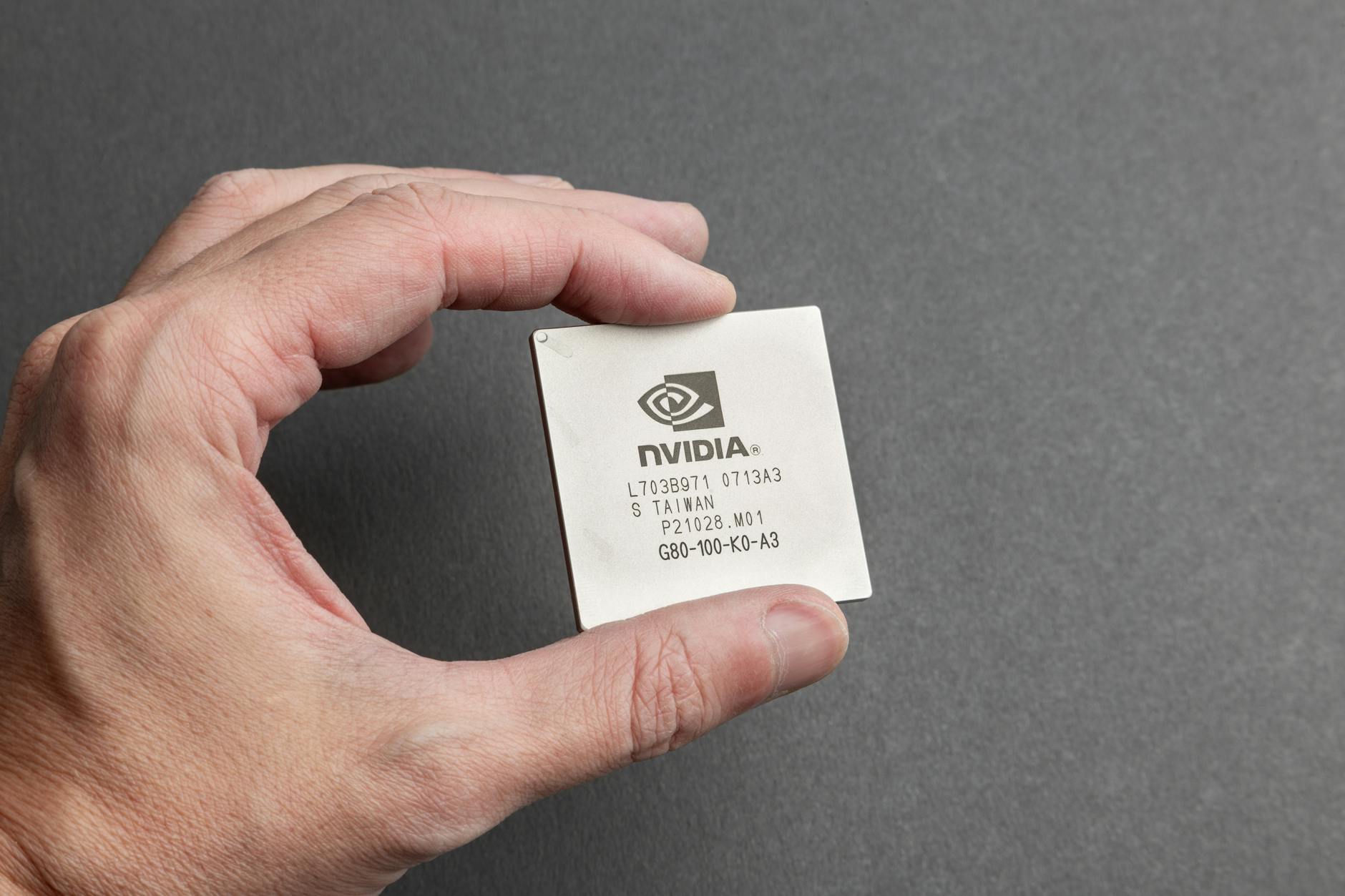
Yet the same data leaves room for a harder reading. The rally may be broadening, but it is not suddenly egalitarian. The Mag 7 still grew profits at more than three times the pace of the rest of the index, and the market still treats Nvidia as the artificial-intelligence bellwether that can move sentiment for the whole complex. A wider profit cycle helps, but it does not erase concentration risk.
That tension between a healthier earnings backdrop and a market still anchored by a few megacap names is the real message in this reporting season. If the first quarter marks the start of a genuine handoff from a narrow AI trade to a broader corporate recovery, valuations across the index look easier to defend. If the broadening story is mostly a rebound off soft comparisons while the marginal gains still belong to AI-linked megacaps, the S&P 500 remains more fragile than the headline growth rate suggests.
What the breadth data says
At first pass, the market case is straightforward. Reuters reported earlier this month that aggregate first-quarter earnings growth for the S&P 500 was running at 28 per cent, already enough to support the view that profits were doing more work than multiple expansion. FactSet’s split makes that argument more precise. All seven Magnificent Seven companies beat earnings-per-share estimates, while 84 per cent of the full index beat estimates, a sign that upside was no longer confined to a tiny leadership group.
For analysts who wanted proof of broader participation, the first quarter offered at least some of it. The question was never whether Nvidia, Microsoft or Meta Platforms could keep posting large numbers. It was whether banks, industrials, healthcare groups and consumer companies could deliver enough incremental growth to keep the index from looking like an AI proxy with 493 passengers attached. A 17.4 per cent earnings gain for the rest of the benchmark does not settle that question for the full year, but it does make it harder to argue that only seven balance sheets matter.
Even so, one quarter is not permanence. The easier comparison point from a year earlier may have flattered some sectors, and the first quarter still came with a market backdrop shaped by the same themes that have dominated 2026: lower conviction about rate cuts, expensive index valuations and an almost automatic habit of using AI winners as the market’s signalling device. Stronger breadth is real. Complete independence from the megacaps is not.
Where AI still sets the pace

Skeptics, though, still have the cleaner objection. Even with broader earnings participation, investors keep looking to the largest semiconductor and platform names for the marginal read on risk appetite. When BBC Business covered Nvidia’s latest quarter, it noted that even record results were not enough to satisfy a market that keeps raising its own threshold for what counts as impressive.
Victoria Scholar of interactive investor told the BBC that “the bar is very high for the artificial intelligence bellwether”.
That standard matters because a market that demands perfection from its AI leaders is still a concentrated market, even if the rest of the index is improving underneath it. Breadth reduces dependence on a single narrative. It does not remove the narrative from price discovery.
Macro conditions make that dependence more awkward. In a separate market report, CNBC highlighted the risk that equities could still be knocked off balance by inflation, geopolitical stress or simple valuation fatigue after the rally. That is the skeptic’s central point: a healthier earnings base can coexist with a market structure that remains unforgiving.
Paul Skinner of Wellington Investment said “we do think it leaves [equities] vulnerable to a correction”.
None of that means the broadening story is false. The market still assigns the highest informational value to a small cluster of AI-linked earnings prints, and it will probably keep doing so until investors see a few more quarters of broad participation. One strong season widens the profit base. It does not yet rewrite the hierarchy of attention.
The next test is margins, not just spending
Investors focused on the build-out may be looking at the right bottleneck. The next leg of earnings breadth may not come from frontier-model companies alone, but from everyone selling the infrastructure, power, networking and labour required to keep the AI build-out going. That would mean a wider winner set even if the model makers themselves face tougher pricing or a harder investor reception.
Recent reporting supports that case. CNBC argued this week that the cost of AI is now visible in earnings across companies such as Meta, Shopify, Spotify and Pinterest. That matters for two reasons. It shows AI is no longer an abstract growth story sitting outside the income statement. It also suggests the payoff question is shifting from revenue excitement to margin discipline.
Elsewhere, The Register reported on Baidu’s latest investor message that building and operating AI infrastructure at scale is emerging as a business with its own margin logic, not just a cost centre for hyperscalers. CNBC Business has also highlighted the demand for workers needed to build and run those facilities. That begins to answer the builder-optimist’s question about where the next earnings beneficiaries may sit: not only in chips and cloud, but in the physical and labour-intensive layers that support the trade.
Taken together, that is why the first-quarter broadening matters more than a single upbeat headline. It suggests the market may be moving from an AI story defined by a few superstar earnings reports to an AI economy that leaks into more sectors, more business models and more kinds of income statements. That is the durable version of breadth investors have wanted to see.
The S&P 500 is in a better position than it was when the rally looked almost wholly dependent on seven companies. It is not in a risk-free one. The other 493 are finally contributing meaningful growth, which strengthens the fundamental case for the index. Next quarter will show if that contribution keeps widening or if the market falls back to waiting for a few AI giants to carry the narrative and the numbers.
Sloane Carrington
Markets columnist. Analytical pieces and deep-dives on monetary policy, capital flows and corporate strategy. Reports from New York.