SoftBank Surges 20% as OpenAI's IPO Pipeline Starts Pricing Into Related Equities
SoftBank Group shares surged nearly 20 per cent in Tokyo morning trading after reports that OpenAI and SB Energy are preparing US IPOs, proving the anticipated listings are already pricing into related equities weeks before any S-1 filing.
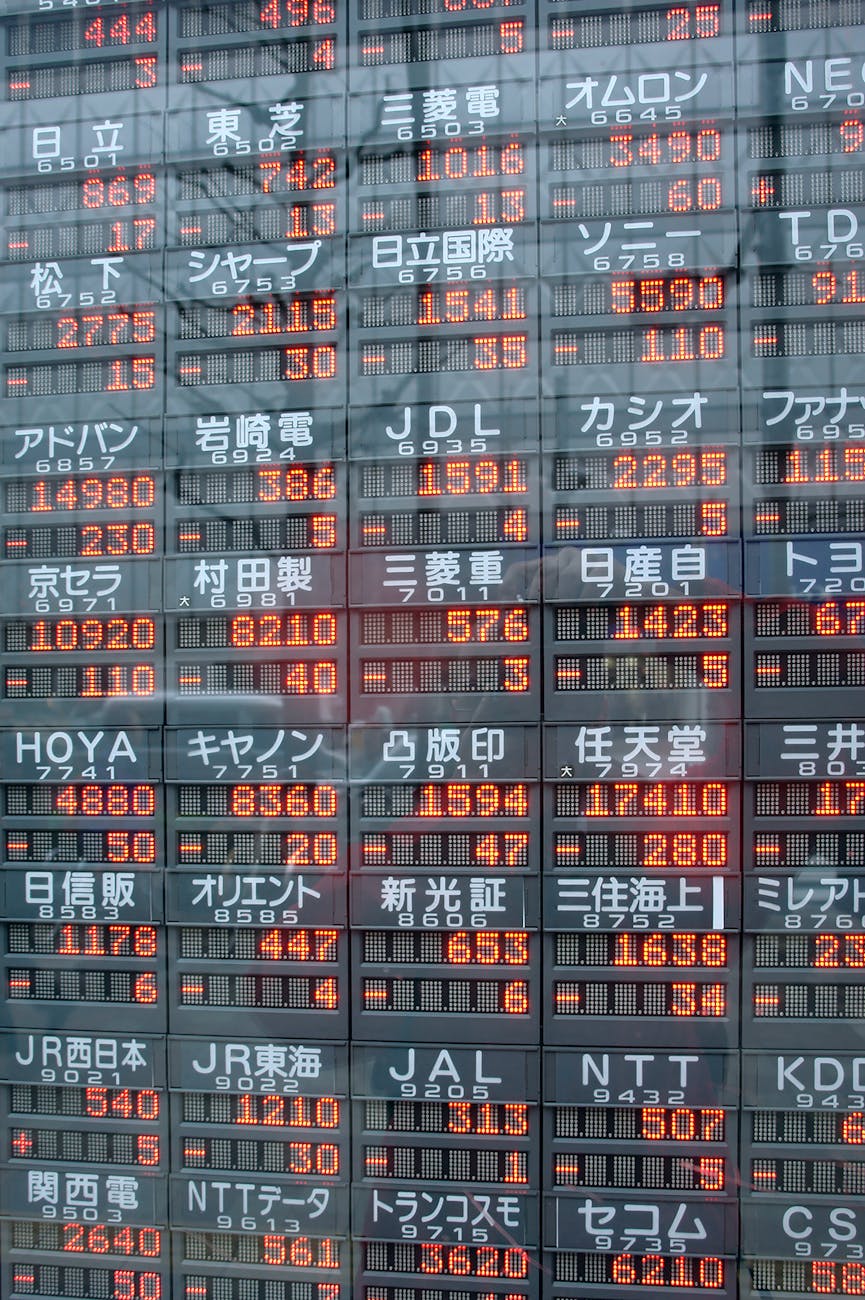
SoftBank Group shares surged nearly 20 per cent in Tokyo morning trading on Wednesday after reports that two of its portfolio companies — OpenAI and SB Energy — are preparing to file for US initial public offerings, proving that the most anticipated tech listings of the decade are already repricing related equities weeks before any S-1 materialises.
The move added roughly 5 trillion yen to SoftBank’s market capitalisation in a single session and extended a rally that has nearly doubled the stock over the past 12 months. With no OpenAI shares available to buy, investors are routing capital into the closest public proxy. SoftBank, having committed $64.6 billion across multiple funding rounds for roughly a 13 per cent stake, is the purest vehicle for pre-IPO exposure. Cumulative gains on the OpenAI position had already reached $45 billion by the end of March, with the fair value of the stake sitting at $79.6 billion.
Pre-IPO pricing leakage through listed parents is nothing new — it recurs in every overheated private market — but the dollar amounts here test every precedent. OpenAI’s most recent funding round in March valued the company at $852 billion, and CNBC reported this week that the company is preparing to confidentially file as soon as Friday, targeting a valuation north of $1 trillion. Goldman Sachs and Morgan Stanley are leading the underwriting. When the S-1 lands, SoftBank’s stake will be marked to whatever multiple public investors accept. The Tokyo surge suggests the market has already run the arithmetic — and the answer implies a SoftBank stake worth more than the group’s entire market capitalisation a year ago.
The debt that underwrites the bet
The rally reflects belief in OpenAI. It also reflects a conviction that SoftBank can hold its position. Son financed much of the commitment through debt, securing a $40 billion bridge loan in March from a syndicate of global banks. On top of that, SoftBank has been raising a margin loan against its OpenAI stake — downsized to $6 billion from an original $10 billion ask after creditor pushback on the $852 billion valuation mark used as collateral.
Those numbers are tightening. SoftBank’s loan-to-value ratio climbed to 20.6 per cent as of December 2025, approaching the 25 per cent ceiling the company has committed to maintain. S&P Global Ratings revised its outlook on SoftBank to negative in March, citing concentration risk and the borrowing required to fund the AI push. Jefferies analyst Atul Goyal downgraded the stock in April, pointing to valuation distortion from the opaque private mark.
It’s very hard to care about anything other than the $3 trillion potential IPOs that, in theory, are going to happen in the next year.
— Sam Lessin, Partner at Slow Ventures
For SoftBank, the debt load produces a binary outcome. If the OpenAI IPO prices at or above the $1 trillion target, SoftBank’s stake becomes a $130 billion asset — more than enough to retire the bridge facility and turn Son’s debt into equity value. If the listing stumbles, the margin loan becomes the first domino. The downsized $6 billion figure suggests the banks have already begun discounting that risk.
Bloomberg reported this week that SoftBank insiders have drawn direct parallels to the WeWork episode, where a single asset’s valuation collapse nearly capsized the group. The difference: OpenAI generates roughly $12 billion in annualised revenue as of early 2026 and faces a demand curve that is still bending upward. But concentration is concentration, and SoftBank’s balance sheet has rarely been this single-threaded.
SB Energy extends the thesis
The second catalyst in Wednesday’s surge is less discussed but equally revealing. SB Energy, a SoftBank-backed developer of energy infrastructure for AI data centres, has confidentially filed for a US IPO alongside OpenAI, Reuters reported. The company is tied to the $500 billion Piketon data centre complex in Ohio and sits at the intersection of the two scarcest resources in artificial intelligence: electricity and compute-optimised real estate.
OpenAI and SoftBank each invested $500 million in SB Energy in January 2026, positioning it as the energy-underpinning layer of the Stargate joint venture. The dual filing — SB Energy and OpenAI dropping within the same news cycle — extends SoftBank’s AI infrastructure thesis beyond the software layer. Son is now betting on the entire stack: models, chips, data centres, and the grid that powers them.
For SoftBank shareholders, the SB Energy filing validates the idea that the AI ecosystem Son is assembling has multiple monetisation exits. It is not a one-asset story, even if OpenAI remains the gravitational centre.
The crowding problem
So much capital chasing so few names creates its own physics. This three-way race between OpenAI, SpaceX, and Anthropic — each targeting IPOs within months of each other — represents a concentration of offering size without historical parallel. PitchBook estimated combined proceeds could exceed $200 billion. Penn Mutual Asset Management noted that figure represents roughly 4.5 times the average annual IPO capital raised between 2000 and 2025.
SpaceX is aiming for a $1.75 trillion valuation with a June 12 listing date, and Goldman Sachs has been tapped to lead that underwriting as well. Anthropic, fresh from a $30 billion funding round at a $900 billion valuation, is planning an October IPO, TechStartups reported. If all three list in 2026, they would create more public equity value than every venture-backed IPO since 2000 combined.
Neuberger Berman portfolio manager George Savvides told CNBC that institutional investors are already gaming sequencing risk. “Nobody wants to be caught in the SpaceX blast radius,” he said — meaning the first mega-IPO to price will set the demand tone, and the ones that follow may find the order book thinner than their bankers’ models project.
Cerebras’ IPO earlier in May — which priced above its range and traded up 30 per cent on debut — was read as a bullish signal for the AI listing pipeline. But Cerebras raised $5 billion. OpenAI is targeting an offering 40 times that size. The extrapolation is not straightforward.

What the market isn’t pricing
The SoftBank surge embeds an assumption that the IPO will proceed smoothly and price at or above the $1 trillion target. OpenAI’s own signals are more mixed. The company missed internal user growth and revenue targets in the first quarter, according to Ainvest, and CFO Sarah Friar has privately expressed concerns about the company’s readiness for public-market scrutiny. Training costs are projected to rise from $30 billion to $121 billion by 2028, according to the same report.
Competition is also shifting. Chinese AI labs are now matching American frontier capability at a fraction of the training cost. If the cost of frontier intelligence is collapsing faster than incumbent revenue growth can compound, the entire valuation framework for AI IPOs will need to be redrawn. OpenAI’s brand, its distribution moat through ChatGPT’s hundreds of millions of users, and its head start in enterprise adoption may insulate it more than Anthropic. The category risk is real.
AI is transforming the world at an unprecedented pace. OpenAI is a clear leader, with world-class technology and an unparalleled global user base.
— Masayoshi Son, SoftBank founder and CEO
Earlier this month, a unanimous jury rejected the lawsuit against Sam Altman, removing the most visible legal overhang. But regulatory scrutiny remains. The SEC is examining whether OpenAI’s governance structure — a nonprofit board controlling a for-profit subsidiary targeting a $1 trillion valuation — raises fiduciary questions the S-1 will have to answer in plain English.
Wednesday’s surge in Tokyo is, in one sense, the market doing what markets do: discounting future cash flows into present prices with imperfect information and high conviction. The scale of the move — 20 per cent on a single news cycle, at a conglomerate whose fate is now functionally tied to one private company’s upcoming listing — says something larger. The public markets have already started pricing the AI mega-IPO wave, and the S-1s haven’t even been filed.
Naomi Voss
Banks and deals reporter covering bank earnings, fintech, M&A and IPOs. Reports from New York.