The 2026 Mega-IPO Wave Is Forcing a Rewrite of How Stock Indexes Work
SpaceX's $1.75T IPO and upcoming Anthropic and OpenAI listings are forcing Nasdaq-100 and Russell indexes to rewrite inclusion rules, triggering $22–27B in forced passive buying.
The 2026 Mega-IPO Wave Is Forcing a Rewrite of How Stock Indexes Work
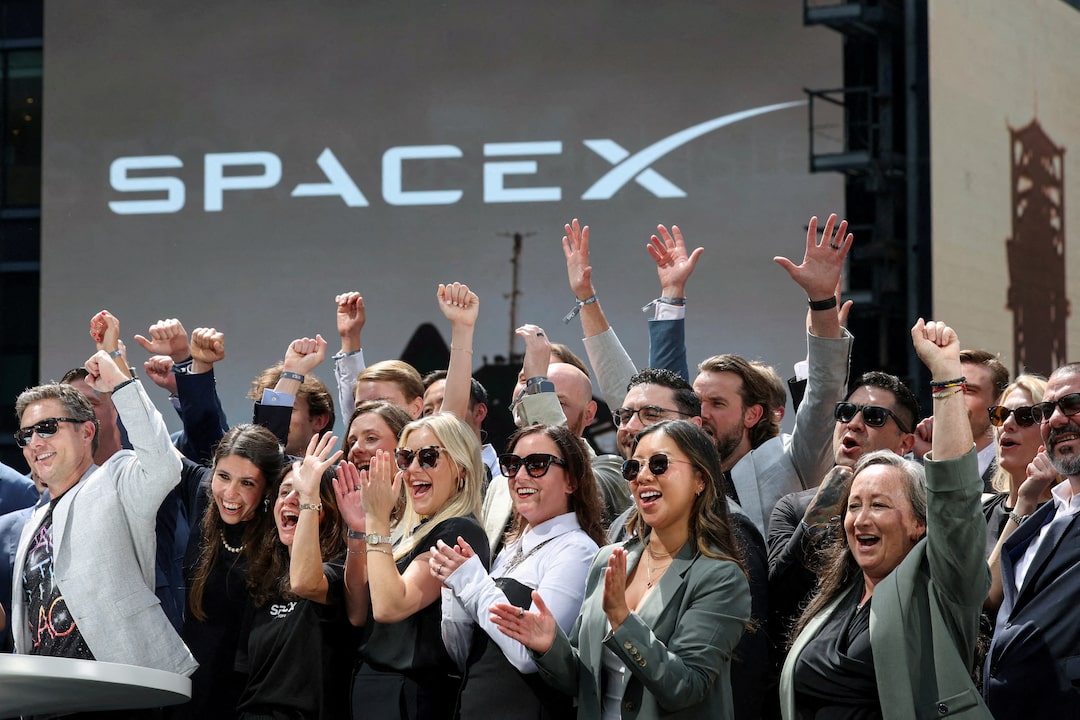
SpaceX will price its initial public offering on June 12 at $135 per share, debuting on the Nasdaq at a $1.75 trillion valuation in what will be the largest listing in US market history. Two more — Anthropic and OpenAI, carrying valuations near $965 billion and $852 billion respectively — have filed confidential S-1s and are expected to follow within months. Together the three companies represent roughly $4 trillion in market value shifting from private hands into public indexes over a compressed window that market infrastructure was not designed to handle.
The question is no longer whether these listings will change the composition of benchmark indexes. The rules are already being rewritten in real time. On June 4, the S&P 500’s index committee rejected a fast-track inclusion path for the incoming class, pushing any addition to the benchmark into 2027. The Nasdaq-100, by contrast, will add qualifying mega-IPOs after just 15 trading days. The Russell indexes proceed on their annual reconstitution schedule. And CRSP, the lesser-known but widely tracked benchmark used by Vanguard’s total-market funds, can include a new listing in as few as five trading days.
The result is a staggered, multi-phase rebalancing event unlike anything in market history. Near-term, the Nasdaq-100 and Russell trackers will need to absorb an estimated $22 billion to $27 billion in forced mechanical buying, according to analysis from SpotGamma. When S&P 500 inclusion eventually arrives — likely in 2027 — the deferred buying swells beyond $50 billion. Fund managers who track these indexes do not get to decide whether to buy; the rules compel them to, at the weight the index assigns.
Recent changes to the float requirements reflect the fundamental challenges to the IPO universe, where companies are larger, and the offered float is often significantly lower than historical norms.
Alex Poukchanski and Alex Bryan, co-authors of the Morningstar Indexes analysis that framed much of the market’s understanding of the problem, made that observation in a paper published last month. The “float” problem is the crux. SpaceX is offering roughly 3 per cent to 5 per cent of its shares to the public, per SpotGamma’s estimate — a thin sliver that leaves the company’s index weight determined by a tiny available pool while its full market capitalisation anchors its position in the benchmark.

That asymmetry matters because passive funds — now managing north of $13 trillion in US-listed equity assets — replicate index weights mechanically. When the Nasdaq-100 adds SpaceX at, say, a 3 per cent weighting based on a $1.75 trillion valuation but with only $75 billion in shares actually trading, the fund must buy enough of that thin float to match the exposure. Demand concentrates on a narrow supply, and the forced buying can distort pricing not just for the new entrant but for existing constituents that must be sold to fund the purchase.
Charles Schwab’s strategists flagged the same dynamic in a recent note, pointing out that accelerating entry for massive IPOs is a double-edged tool: it ensures broad-market trackers reflect the investable universe quickly, but it concentrates turnover risk in a single name during a compressed window.
The mechanics are not academic. They are about to play out in real dollars across every major passive strategy. And they arrive at a moment when the market is already interrogating whether the IPO boom itself carries a different kind of signal.
We are about to see another wave of IPOs, with SpaceX, OpenAI and Anthropic competing to make the biggest market splash. The question is ‘why now?’ If AI is going to transform the world, why are tech giants deciding to share the wealth with normies? Perhaps they know something we don’t.
Dario Perkins, an economist at TS Lombard, laid out that sceptical case in a note to clients that drew a structural parallel to the dot-com era: insiders exiting at the top, retail absorbing the float, the cycle turning shortly after. It is a legitimate historical pattern. The IPO windows of 1999–2000 and 2021–2022 both preceded sharp equity drawdowns.
But the comparison has limits. SpaceX generated roughly $15 billion in revenue in 2025 from its Starlink and launch businesses, with positive operating margins. Anthropic and OpenAI have enterprise revenue run-rates in the billions, tied to API contracts with corporate and government customers, not speculative advertising models. These are not concept stocks. They are large, revenue-generating enterprises that stayed private far longer than any comparable company in market history — a structural shift in itself.
That shift is the deeper story. A generation ago, Microsoft went public in 1986 at a $778 million valuation, roughly nine years after incorporation. SpaceX is listing 23 years after its founding, at a valuation roughly 2,250 times larger than Microsoft’s debut. The private-capital ecosystem — late-stage venture, crossover funds, sovereign wealth — has grown deep enough to carry companies to trillion-dollar valuations before any public-market investor can buy a share.
What changes when the IPO is no longer a company’s entry into grown-up capital markets but its graduation from them? For one, the price-discovery function migrates. The IPO price is set not by public-roadshow demand discovery but by the last private round, adjusted by the underwriters’ syndicate desk. For another, the retail allocation — 30 per cent in SpaceX’s case, a proportion CNBC reported as unusually high — becomes the public’s first and perhaps only chance to buy before index funds take over the order book.
None of this means the market is broken. It does mean the plumbing is being re-engineered under live load. The S&P 500’s decision to defer, the Nasdaq-100’s fast-track protocol, the CRSP’s five-day window, the Russell reconstitution — each is a lever being pulled independently, and the interaction effects across these levers have never been tested at this scale.
For investors, the practical question is straightforward: when the forced buying begins, what gets sold? The $22 billion to $27 billion in near-term passive demand does not materialise from nowhere. Index-trackers fund new purchases by selling existing holdings proportionally across the benchmark. In a concentrated market where the top seven stocks already account for more than 30 per cent of the S&P 500’s weight, the rebalancing math favours the mega-caps that dominate the sell side of the trade — and penalises the smaller names that lose their incremental allocation to the new trillion-dollar entrant.
The 2026 IPO queue is not a bubble signal by itself, though Perkins is right to flag the pattern. It is better understood as the market structure catching up to a decade in which the most valuable companies in the world chose to remain private. The indexes are adapting. The question is whether the adaptation is smooth enough that investors barely notice, or whether the friction — concentrated in a handful of trading days across the summer and fall of 2026 — leaves a mark.
Sloane Carrington
Markets columnist. Analytical pieces and deep-dives on monetary policy, capital flows and corporate strategy. Reports from New York.