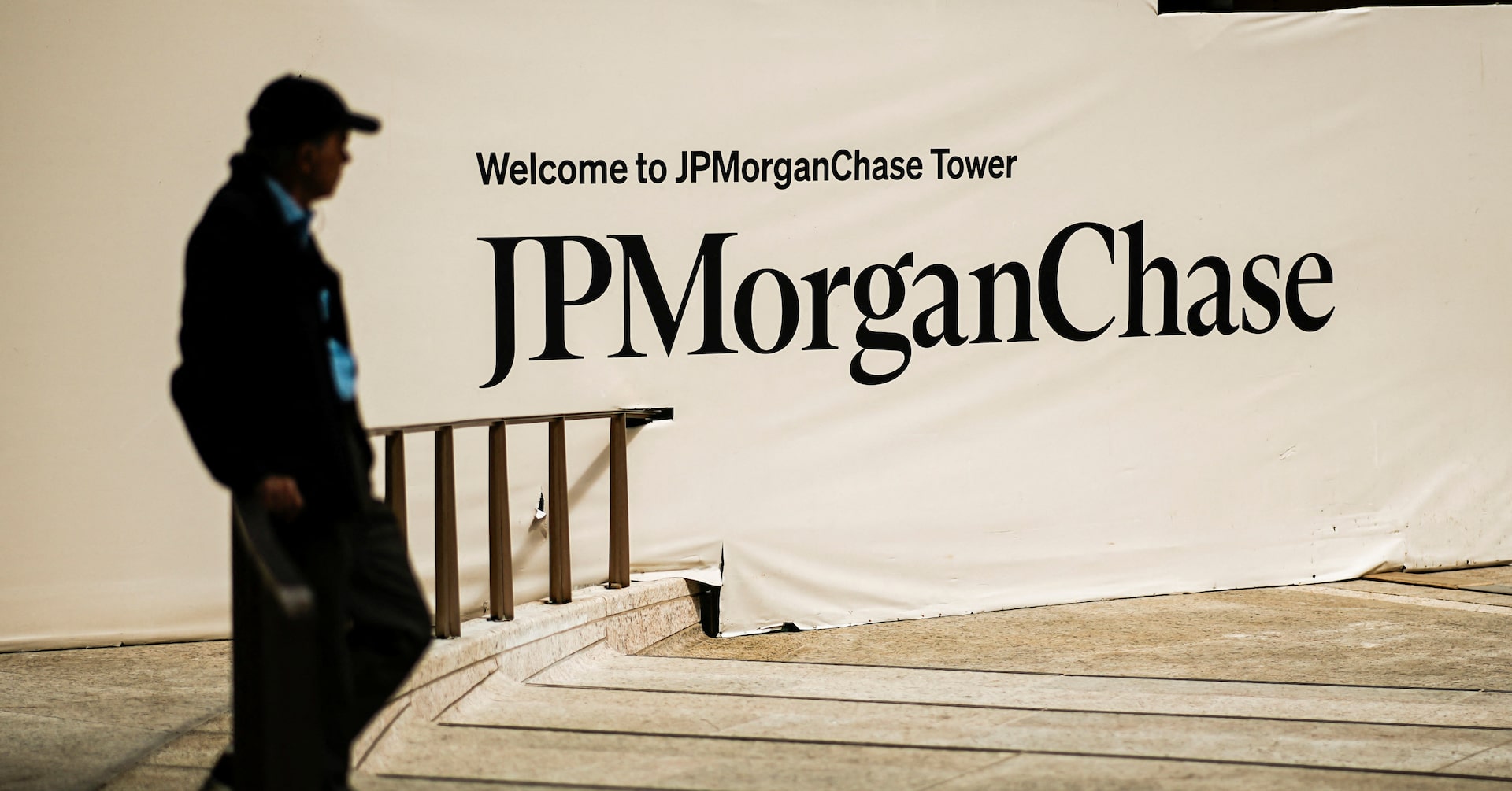
The year of the bank is really a story about control
Banks vs private credit is becoming a 2026 market-structure trade as deal fees rebound, regulators push disclosure and lenders regain leverage.

Wall Street banks are regaining pricing power and strategic relevance in 2026. Merger financing, IPO mandates and risk-transfer work are rebounding, while strains in private credit and tougher disclosure demands are pushing capital back toward regulated balance sheets. Read together, reporting from The New York Times, Bloomberg and the Financial Stability Board suggests markets again want intermediaries that can underwrite, syndicate and supervise risk.
Private equity, hedge funds and private-credit firms dominated the previous cycle by promising speed, lighter disclosure and less regulatory friction. That shift has not disappeared. But as volatility picks up, financing gets more complex and policymakers ask harder questions about opaque lending chains, the advantage looks different. The universal bank no longer looks like a legacy institution. It looks like the one place where funding, information and distribution still sit under one roof.
Citi analysts captured the turn in a New York Times report.
“The stars are aligning for banks in a way that hasn’t been seen in multiple decades.”
— Citi analysts, quoted by The New York Times
The change shows up first in fees. A reopened deal calendar means banks are being paid not only to lend, but to decide who leads a mandate, who sets terms and who distributes paper. Business Insider’s reporting on the SpaceX IPO race and a Financial Times argument about lead-left bragging rights showed how much revenue and status still sit inside a marquee listing. Add a JPMorgan-led $10.2 billion Warner Bros. loan refinancing, and the picture is clearer: banks are reclaiming the choreography of capital markets, not merely taking spread risk.
Where private credit stops looking invincible
The comeback looks stronger because private credit no longer looks frictionless. The FSB said the sector had grown to roughly $1.5 trillion to $2.0 trillion by the end of 2024, with about $220 billion of drawn and undrawn bank credit lines to private-credit funds and commercial estimates of total bank exposures reaching $270 billion to $500 billion. For years that growth was read as proof that nonbanks had found a cleaner way to lend. In 2026 it is being read, increasingly, as evidence that private credit never really escaped the banking system. It simply sat one layer further out.

That broader point runs through Reuters’ reporting on JPMorgan’s effort to offload $4 billion of private-equity-linked loan exposure. The move suggests banks are still warehousing risk created during the years when private sponsors could command generous terms, but they are now repricing that exposure in a market less willing to pretend every credit can be smoothly distributed. It is also a reminder that banks can lose money in the transition back to prominence, even as the transition itself strengthens their role.
Critics of private credit are not saying banks are insulated. They are saying the system is more entangled than the private-credit boom implied. In a Reuters analysis, Alberto Gallo argued that the issue is not an immediate collapse but the possibility that opaque marks and funding assumptions become destabilising once confidence starts to wobble.
“It’s hard to say what’s going to crack first… and it becomes a self-fulfilling prophecy whereby you could get a bigger, more systemic issue occurring.”
— Alberto Gallo, quoted by Reuters
From that angle, the 2023 bank-run playbook is a useful comparison. The risk today is not a straight replay of uninsured deposit flight. It is slower and more positional: valuation opacity, limited secondary liquidity and lender exposures that are diversified enough to look manageable until a specific corner of the market has to clear in public. Stress in adjacent markets restores the value of institutions built to monitor and distribute risk at scale, even if that does not make every bank safer.
How regulators are changing the trade
Regulation is also changing the competitive math. Bloomberg reported that the UK’s Financial Conduct Authority is considering compulsory quarterly disclosure for private-credit firms, while the FSB’s own warning focused on persistent data gaps and the difficulty of mapping interconnections. That is a subtle but important shift. It does not mean regulators suddenly prefer banks. It means the disclosure premium that once burdened banks alone is starting to spread outward.

Asked why the regulator wants more visibility, an FCA spokesperson told Bloomberg that the point was supervision and confidence, not administrative box-ticking.
“Better data means we can supervise risks effectively, support market confidence and identify opportunities for growth.”
— FCA spokesperson, quoted by Bloomberg
From a bank’s perspective, that sentence reads like a competitive tailwind. Big regulated lenders already spend heavily on reporting, surveillance and capital planning; those costs have long made them look slower than private-credit rivals. Once the market starts pricing transparency as an asset rather than a burden, the same infrastructure becomes part of the franchise. The private-credit model does not disappear under that pressure, but it does lose some of the mystique that came from moving large sums of money with less public scrutiny.
Still, there is no neat divide between the winners and the exposed. The FSB’s figures show banks remain directly tied to the ecosystem through credit lines, funding links and borrower overlap. That makes this story a rebalancing, not a coronation. Banks are benefiting because they sit at the centre of the map regulators are now trying to redraw, yet the same centrality means they will absorb some of the pain if private-credit valuations, sponsor exits or covenant assumptions start to break more visibly.
What could make the comeback stick
A durable banking revival needs more than trouble at rival lenders. It needs a sustained pipeline of work that rewards scale, balance-sheet capacity and distribution. So far, that pipeline is visible. SpaceX’s expected IPO economics, JPMorgan’s large merger-related financing and JPMorgan executives’ view that AI is moving from hype to execution all point to the same conclusion: the next fee cycle belongs to institutions that can connect technology capex, sponsor financing, advisory and capital-markets distribution in one conversation.
Markets will not reward every bank equally. The Times noted that Citizens Bank’s shares have risen more than 50 per cent over the past year, an example of how investors are rewarding even smaller franchises when they see cleaner exposure to revived capital-markets activity. Even so, the clearest winners are likely to be banks with durable origination platforms and the patience to let regulation work in their favour. The story is less that bankers are suddenly glamorous again. It is that the market is rediscovering the value of institutions that know where the risk is, what price clears it and which client wants the paper once it is packaged.
So 2026 may turn out to be the year of the bank, but not in the nostalgic sense implied by bonus headlines. It would mean something more structural: after a long period in which private capital looked faster, lighter and more profitable, the system has swung back toward lenders whose advantage is control. If deal flow holds, if regulators keep tightening the information loop around nonbanks and if private-credit stress remains manageable rather than catastrophic, banks will keep taking share. If those conditions fade, the pendulum stops. For now, Wall Street’s best argument is not that private credit failed. It is that when markets get complicated again, everyone ends up needing a bank.
Sloane Carrington
Markets columnist. Analytical pieces and deep-dives on monetary policy, capital flows and corporate strategy. Reports from New York.