Nvidia earnings could puncture the AI options bubble
Options traders have crowded into Nvidia calls ahead of May 20 results. If the print is merely good, the AI trade's richest premium may deflate first.
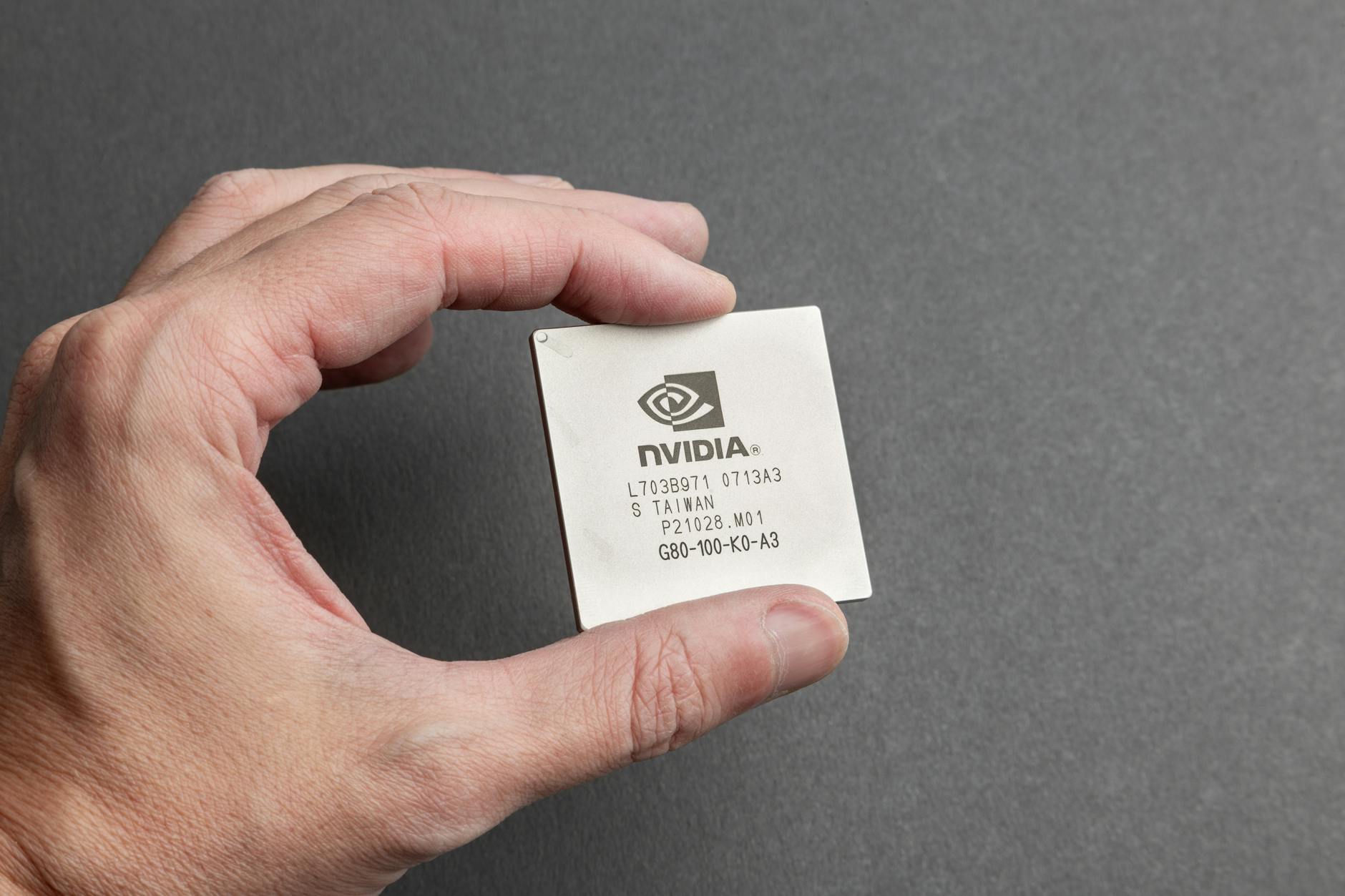
Nvidia goes into its May 20 earnings report as the market’s cleanest AI proxy and, increasingly, its most crowded one. Options traders are pricing an implied move of about 7.5 per cent around the release, CNBC reported, a rich enough premium to make the quarter a test not just of revenue demand but of how much speculative air now sits inside the broader AI trade.
The issue is no longer only what Nvidia sells. It is also what its options can do for investors who want fast, geared exposure to the next leg of the rally. When too much of that exposure piles into short-dated calls, an earnings report stops being a simple verdict on execution. It becomes a clearing event for positioning.
Seeking Alpha framed the setup as an options bubble risk rather than a straightforward debate about valuation. A stock can remain fundamentally strong and still become vulnerable if too much of the bullish case is being expressed through premium paid upfront for immediate upside.
The numbers around that positioning are hard to ignore. One recent bullish session saw traders spend about $648 million of $818 million on Nvidia calls, CNBC reported, a sign that upside demand was doing most of the work. In a separate read on the setup, CNBC also cited about $40 billion of options delta against $4 billion of premium into one expiry — a large amount of directional exposure hanging off a comparatively small cash outlay. It can amplify the upside on the way in. It can magnify the air pocket on the way out.
Read those figures as proof that implied volatility itself has become absurd and you might be half right. ORATS found Nvidia’s implied move heading into earnings looked broadly in line with the stock’s own realized post-earnings history. Reuters made a similar point before Nvidia’s February results, when options traders were pricing a 5.6 per cent move, the smallest expected post-earnings swing in three years. Event volatility can look normal even when ownership of the upside has become unusually concentrated.
The coming report sits in that gap. Nvidia can clear the first bar and still trip over the second if too many traders arrive with the same near-dated upside structure.
Brent Kochuba, the founder of SpotGamma, captured that reflexive mood in comments to CNBC: “How do you reprice China reopening to Nvidia, I think that’s what people are repositioning for right now.” Even if traders are reaching for different macro justifications, the underlying habit is the same. Nvidia has become the instrument through which investors express several bullish ideas at once — AI infrastructure demand, megacap momentum, the hope that any wobble in the narrative will be brief.
The positioning problem
A plain beat is not enough when the market has already been paying up for convexity. The stock has to beat, guide strongly and leave room for another leg higher. Otherwise buyers of those calls are left fighting time decay and the usual post-earnings drop in implied volatility.
Ken Mahoney, chief executive of Mahoney Asset Management, put the risk plainly in comments reported by Reuters: “It does feel like regardless of how good the report is and their guidance, that probably has already been baked in.” That is not a bearish call on Nvidia’s business. It is a warning about price discovery when a company’s fundamentals and the market’s appetite for borrowed money have started to diverge.
Options sellers, by contrast, do not need a collapse to win. They need reality to fall short of the premium. If implied swings stay near current levels and the stock moves less, the trade that looked like the safest way to chase upside can become the most expensive way to have been right about the company.
The trade can disappoint on several fronts. Nvidia could miss. It could beat but offer guidance that only confirms what investors already assumed. It could deliver strong numbers yet fail to expand the story around China, new product cycles or enterprise AI spending enough to justify another round of aggressive call buying. For holders of common stock, those are varying shades of disappointment. For holders of near-dated options, they can look the same.
Nvidia sits inside a market structure feedback loop that makes it especially important. When investors rush into calls, dealers often hedge by buying the underlying shares, which can help squeeze the stock higher and reinforce the original bullish thesis. Once the event passes, that support can fade. If the earnings reaction is smaller than the premium implied, or if the stock trades lower, the same positioning that pushed the move upward can unwind quickly. A crowded trade does not need disastrous fundamentals to deflate. It just needs fewer reasons to keep paying more for upside.
What would break the spell
The May 20 report is less a routine earnings checkpoint than a referendum on whether the AI trade is still being repriced higher or merely being refinanced at richer terms. A durable upside move would tell investors that Nvidia can still outrun both high expectations and heavy options ownership. A muted reaction would say something different: the market may still believe the AI story, but not at any premium.
The market implication extends beyond one ticker. Nvidia has functioned as the highest-beta expression of the AI build-out, so a post-earnings reset in its options complex would also test how much of the broader trade has been carried by fundamentals and how much by the ease of buying upside exposure in the market’s favourite name. Funds that have treated Nvidia calls as a liquid shortcut to the whole theme would face that question directly.
Crowded trades often roll forward rather than collapse. Fresh call buying can simply migrate to the next expiry if management gives investors a new reason to chase. But the balance of risk around this report appears asymmetric. When so much of the bullish case is already embedded in short-dated upside bets, a merely solid quarter can feel weak, while a truly exceptional quarter only preserves the need to be exceptional again next time.
Nvidia has met that standard repeatedly over the past year. Whether the market can keep demanding more firepower on top of more growth is the question this report will test. Earnings will answer the fundamental part. The options market may answer the more revealing one.
Sloane Carrington
Markets columnist. Analytical pieces and deep-dives on monetary policy, capital flows and corporate strategy. Reports from New York.