Robinhood bets prediction markets can fill crypto revenue gap
Robinhood is positioning its prediction markets subsidiary as the next growth engine after crypto transaction revenue fell 47 per cent year over year in the first quarter, betting its 27.4m funded customer base can outscale dedicated platforms Kalshi and Polymarket.
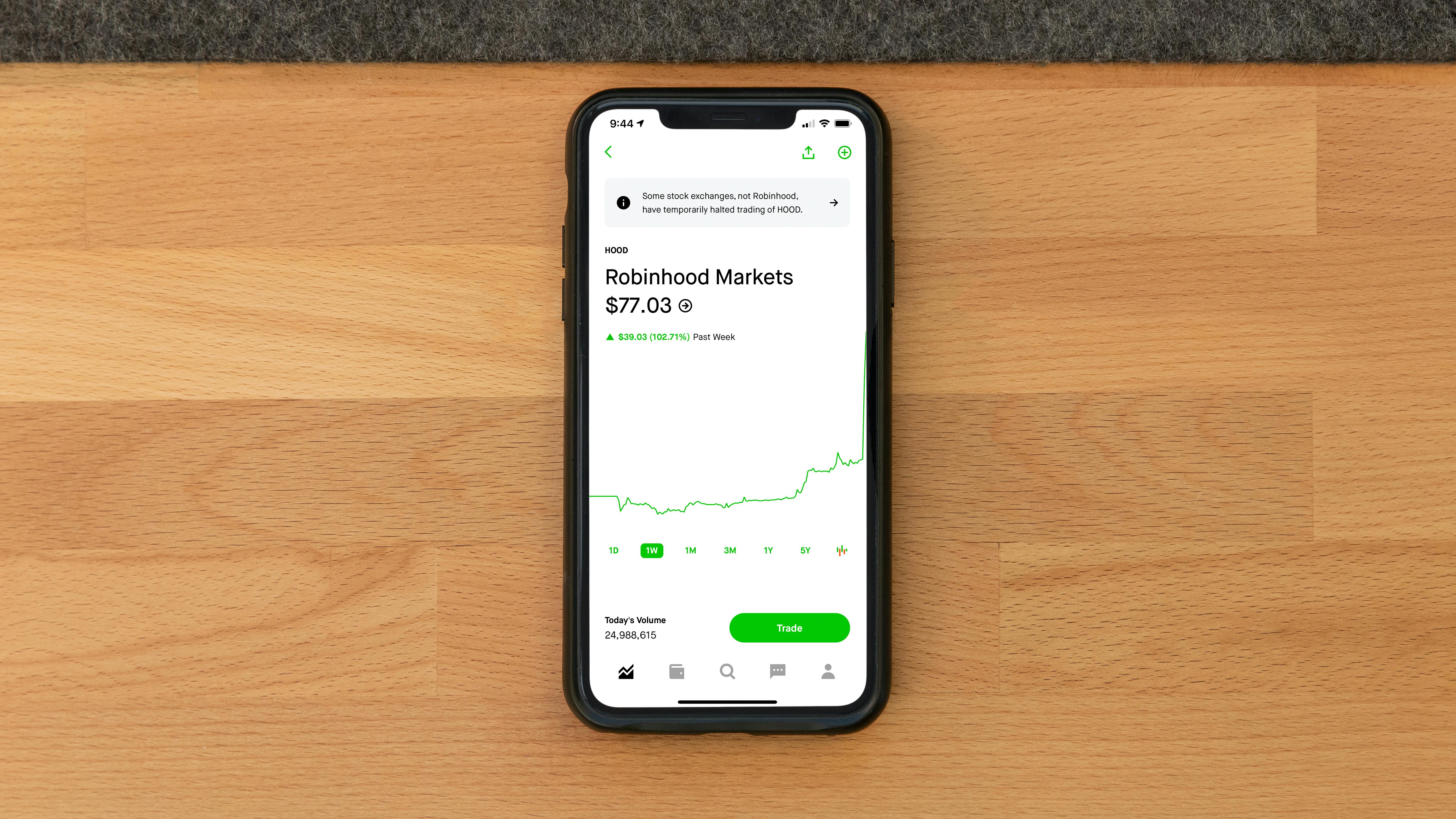
Robinhood Markets is turning to prediction markets after crypto transaction revenue, the boom-and-bust engine of its top line for years, fell 47 per cent year over year in the first quarter.
The vehicle is event contracts. Users bet on yes-or-no outcomes. Federal Reserve rate decisions. Sports results. Company events. The arithmetic is straightforward: take the 27.4m funded customers already trading equities, options, and crypto on Robinhood and point them toward a market dominated by two much smaller competitors, Kalshi and Polymarket.
Three questions hang over the pivot. Does Robinhood’s scale translate to a product users want? Will regulators let prediction markets grow? Can the company build the business before the next crypto rally masks the structural problem?
The crypto headwind
Robinhood’s dependence on crypto cuts both ways. In bull markets, transaction revenue climbs. In downturns, the same users stop trading. Q1 2026 was the downside: crypto transaction revenue dropped nearly half from a year earlier.
The pattern is not new. Crypto transaction revenue has swung from 14 per cent of total revenue to 32 per cent and back over the past eight quarters, per company filings. The stock follows. Shares closed at $77.02 on Thursday, up 0.97 per cent on the session. They sit near the midpoint of a 52-week range that runs from $53.74 to $153.86. The $69bn market capitalisation prices in growth but penalises crypto dependence.
The broader sector tells the same story. Coinbase reported a Q1 revenue miss as volumes dropped, even as its market share hit a record 8.6 per cent. Retail crypto traders retreat when prices stall. Exchange revenue follows. Bitcoin slipped to $79,614 this week as negative funding rates set a 10-year record, a signal of bearish sentiment among leveraged traders.
For Robinhood, the crypto decline is structural as well as cyclical. Its crypto offering is narrower than dedicated exchanges, confined to a curated token list. That controls compliance costs but caps the upside when altcoin manias drive volume on offshore venues.
How event contracts work
Robinhood Derivatives, a company subsidiary, handles the prediction markets push. The mechanics are binary. A contract on a specific outcome pays $1 if the event occurs and zero if it does not. Prices between one cent and 99 cents capture the market’s implied probability. A contract trading at 75 cents implies a 75 per cent chance. A buyer at that price gains 25 cents per contract before fees and spreads if the outcome lands.
The scope is broad. Robinhood has outlined contracts covering sports, politics, economic data, crypto prices, and company-specific events. That puts it against Kalshi, with roughly 5.1m monthly active users per Sensor Tower, and Polymarket, with fewer than 1m active users per Coindesk.
Event contracts differ from traditional derivatives in one way that matters for retail adoption: they have a defined, binary endpoint. An option on a stock can expire in or out of the money, but its value fluctuates continuously. An event contract trades strictly on the probability of a single outcome. Simpler. That is the product thesis.
The scale advantage
Distribution is Robinhood’s core argument. The company’s 27.4m funded customers eclipse the combined user bases of Kalshi and Polymarket. Robinhood Gold, the premium tier with 4.3m subscribers paying $5 per month or $50 per year, supplies a cohort of engaged users to cross-sell.
Scale matters because prediction markets are a liquidity business. More participants narrow spreads. Narrower spreads attract more participants. If Robinhood onboards 5 per cent of its funded customers into event contracts, it fields roughly 1.4m active users, larger than Polymarket’s entire base.
The open question is whether stock and crypto traders want prediction markets. The products are adjacent, not identical. Options traders already think in probabilities. Robinhood’s options volume has been a consistent growth driver. The leap from a call option to an event contract on a Fed decision is short. The reverse is less certain: a user who arrives for election betting may never migrate to equity options.
Kalshi and Polymarket have the first-mover advantage in brand recognition among prediction-market natives. Kalshi won a legal fight with the CFTC to list election contracts, earning institutional credibility. Polymarket built a loyal base during the 2024 US election cycle as news organisations cited its real-time odds. Robinhood enters a market where the incumbents have already set the user experience.
More than one growth lever
Prediction markets are not the only hedge. Robinhood has been layering on revenue streams with lower correlation to crypto cycles. Gold subscriptions. Card-based banking. AI portfolio tools. Tokenised assets. Each aims to reduce the company’s dependence on transaction-volume swings.
Gold has been the quiet success. At 4.3m subscribers, recurring revenue from that tier alone runs above $250m annualised. The product bundles interest on uninvested cash, lower margin rates, and interest-free margin. It is sticky in a way per-trade revenue never will be.
The banking push puts Robinhood against Block’s Cash App and PayPal. Block reported a Q1 earnings beat on Thursday and lifted its full-year gross profit outlook to $12.33bn. The consumer fintech wallet remains a growth category even as crypto slows.
Tokenised assets are a longer-dated bet. If securities migrate on-chain over the next decade, a platform with 27.4m brokerage accounts and a native crypto business sits at the intersection. That thesis will not show up in next quarter’s numbers. It shapes how engineering resources are allocated today.
The regulatory question
Prediction markets sit in a grey zone. The Commodity Futures Trading Commission has authority over event contracts but has oscillated between permitting and restricting them. Kalshi fought and won the right to list election contracts, but the precedent is narrow. If event contracts are reclassified as gambling rather than derivatives, the category contracts.
The SEC under Chair Paul Atkins has signalled openness to modernising rules around digital assets and trading infrastructure. Atkins called on Congress on Thursday to pass the CLARITY Act, which would create a federal framework for crypto and, by extension, adjacent products like event contracts. Legislative timelines are unpredictable. The CFTC’s posture can shift independently of the SEC’s.
Robinhood has flagged the risk. Its most recent 10-K cites regulatory changes as a material threat to its derivatives business. Leo Sun, an analyst at the Motley Fool, noted on Thursday that “tighter regulations for prediction markets could still hamper those ambitious plans.”
What comes next
Robinhood reports Q2 results in August. Three numbers matter. Crypto transaction revenue: was Q1 the trough or the start of a longer slide? Gold subscriber growth: a proxy for non-trading revenue stickiness. Event contract volumes: any disclosure signals whether the prediction markets thesis is converting to actual usage.
The stock at $77 sits near the middle of its 52-week range. The market has not priced in a successful pivot, nor a prolonged crypto winter. The bull case: prediction markets give Robinhood a growth story decoupled from bitcoin’s price. The bear case: event contracts remain niche, regulation tightens, and the next crypto rally merely postpones the diversification question.
For now, the company is placing a bet on a product designed for exactly that.
Sloane Carrington
Markets columnist. Analytical pieces and deep-dives on monetary policy, capital flows and corporate strategy. Reports from New York.